
Why AP automation tools are essential
What makes construction AP harder than most
Construction accounting isn't standard bookkeeping. The cost code structure alone can go three levels deep, across cost codes, phase codes, and class codes, with each line item on a PO potentially coded differently. A single invoice might need to be split across multiple budget lines before it can be approved and paid.
Add to that the fact that invoices arrive in every format imaginable, some emailed as PDFs, some dropped off on site as paper, some submitted through a supplier portal. Each one needs to be captured, matched against the corresponding PO and delivery confirmation, and reconciled before it moves forward. When that process runs through email threads and spreadsheets, discrepancies don't get caught until someone has the time to look, which is often not until month-end, when the damage is already done.
Many of those failed matches trace back to messy vendor records, like one supplier set up under two names, which is why cleaning up vendor data is one of the quickest ways to reduce invoice time.
The result is accounting teams spending their days on data entry and document chasing instead of on the analysis and forecasting that actually helps the business.
What AP automation changes
SubBase automates the steps in the AP process that don't require human judgment, so the people doing the work can focus on the steps that do.
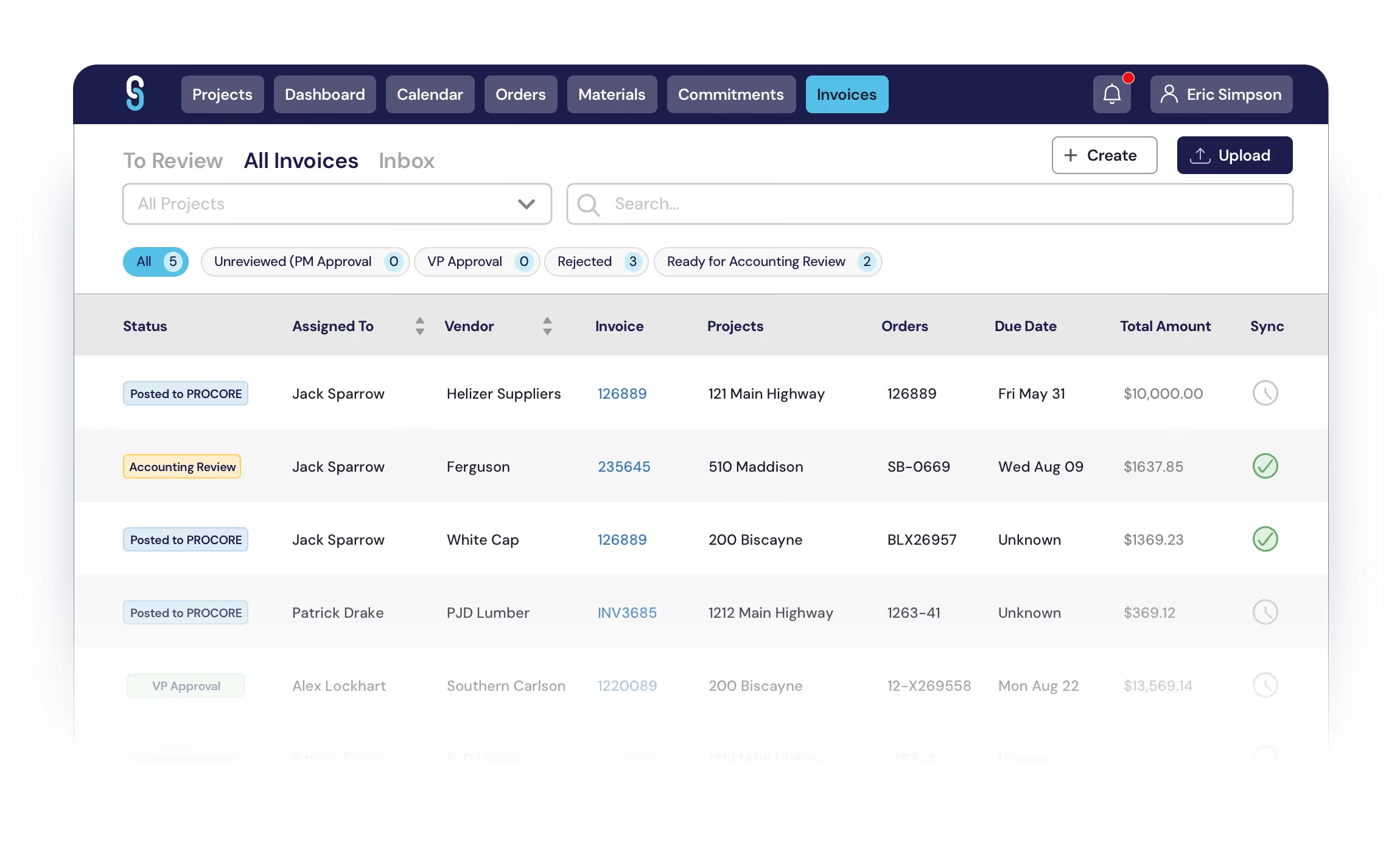
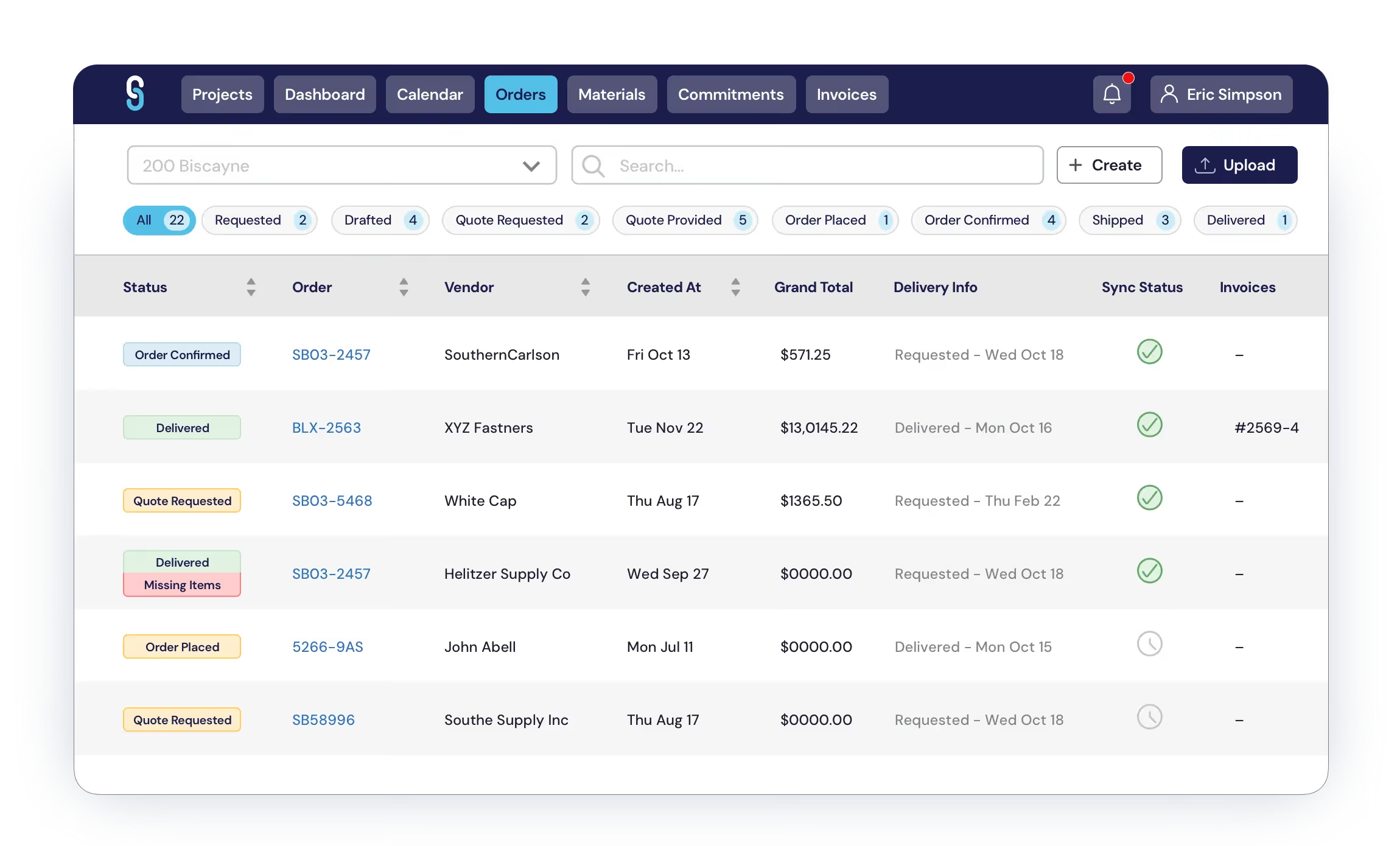
When an invoice comes in, SubBase matches it against the PO and the delivery confirmation automatically. Every line item is checked. If everything aligns, it moves straight to the approval workflow. If there's a discrepancy, it gets flagged immediately, not discovered weeks later during a reconciliation exercise. From there it sits in the invoice inbox with an In Review status and a report history, so anyone can see where the issue stands.
The price discrepancy algorithm has caught significant overcharges that would have slipped through a manual process. One customer saw $45,913.70 in overcharges identified in their first year alone.
Approval workflows are customizable. A straightforward invoice can move through a simple two-step process. A larger commitment or a disputed line item can be routed through a more complex multi-level review. Either way, the workflow is defined in advance and enforced automatically. Nothing waits in someone's inbox without a clear next step.
That routing depends on clean vendor records, because an invoice filed under a duplicate supplier name never finds its PO.
Cost codes are assigned at the point of purchase, not at the point of payment. By the time an invoice arrives, the coding is already done. Accounting isn't deciphering handwritten notes on a delivery ticket or guessing which budget line applies.
Miami general contractor Grycon saw the same shift: with invoices matching to POs automatically, its CFO could focus on forecasting, budgeting, and compliance.
What it looks like in practice
JGR Construction's Financial Controller Vivian Jimenez described the practical difference: having pricing information and recent purchase history available on demand means hours of phone calls chasing that information simply don't happen anymore. The data is there when you need it.
JGR also pulled their month-end close forward three to six weeks after implementing SubBase, and caught tens of thousands of dollars in billing errors in the process. That's not a marginal improvement. That's a fundamentally different accounting operation.
The full JGR Construction story covers how they piloted the rollout with a project engineer as the internal champion before expanding it to new projects.
The broader effect
When AP runs cleanly, the effects reach further than accounting. Vendors get paid faster because invoices aren't sitting in a queue waiting for a manual match. Cash flow visibility improves because committed spend is captured at the point of purchase rather than at the point of payment. Budget reporting reflects reality rather than lagging weeks behind it.
That is the core of construction budget management for a trade contractor: knowing what's committed on each line before the invoice arrives.
For subcontractors managing multiple active projects, that real-time financial clarity is what makes it possible to catch a budget problem before it becomes a project problem.
Manual AP processes were never designed to scale with the volume and complexity that a growing subcontractor operation generates. The cost of maintaining them, in labor, in errors, and in the opportunities missed while people are buried in paperwork, is what makes automation not a luxury but a necessity.
Book a demo to see how SubBase handles it: https://www.subbase.io/subbase-demo


Stay in touch
Sign up for our monthly newsletter to receive exclusive company updates, learn about industry trends and find out where we will be next. Don't miss out – subscribe today!

