
Eliminating the hidden costs of manual entry in construction procurement

What it actually costs
Processing a single invoice manually costs approximately $21 in labor. That's not a dramatic number in isolation. Multiply it by your monthly invoice volume and the number becomes hard to ignore. A contractor processing 500 invoices a month is spending roughly $10,500 in labor just to move paper through the system. Not to review it strategically. Not to catch problems. Just to enter, route, and file it.
Douglas Orr Plumbing was processing 3,000 POs through SubBase and saved $189,000 in a single year on labor hours alone. That's what the arithmetic looks like at real volumes.
And that figure only captures the direct labor. It doesn't count the cost of errors that make it through. A mistyped unit price, a quantity transposed, a cost code applied to the wrong project. Each of those takes additional labor to identify and correct, if they get identified at all. When they don't, the money just leaves.
Why double-keying persists
Most contractors know this is a problem. The reason it persists is that the alternatives require change, and change in the middle of running dozens of active projects is hard to prioritize.
The path of least resistance is to add a person. Volume goes up, hire another AP clerk. More POs, more data entry, more of the same. It feels like scaling. It's actually just making the same inefficiency larger.
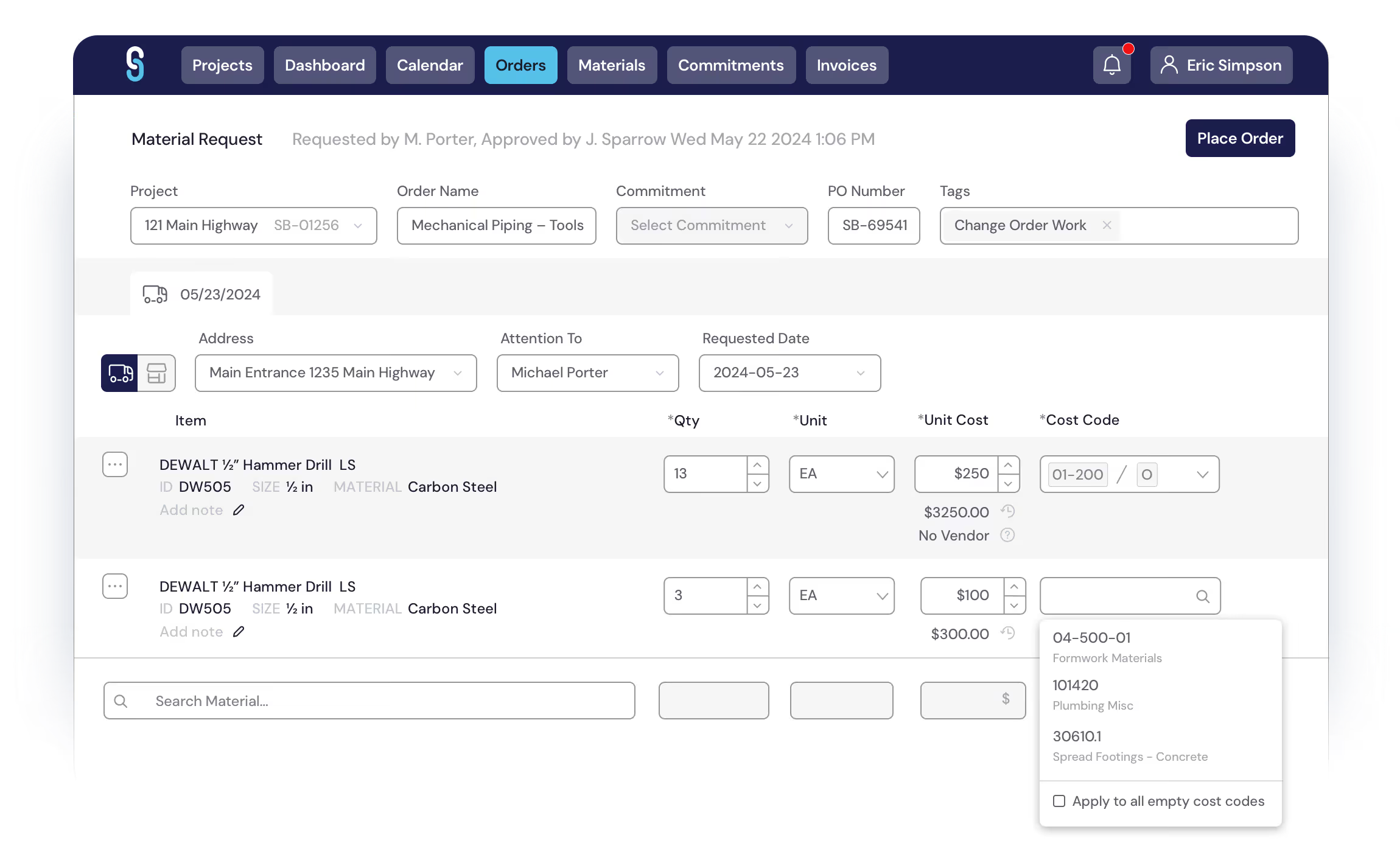
Generic accounting software doesn't fix it because it's a storage system, not a capture system. It still requires someone to enter the data before the software can track it. The manual step doesn't disappear. It just has a better place to land.
Where automation actually helps
The goal isn't to remove humans from procurement. It's to remove humans from the parts of procurement that a system can handle reliably: reading an invoice, matching it to a PO, flagging where the numbers diverge.
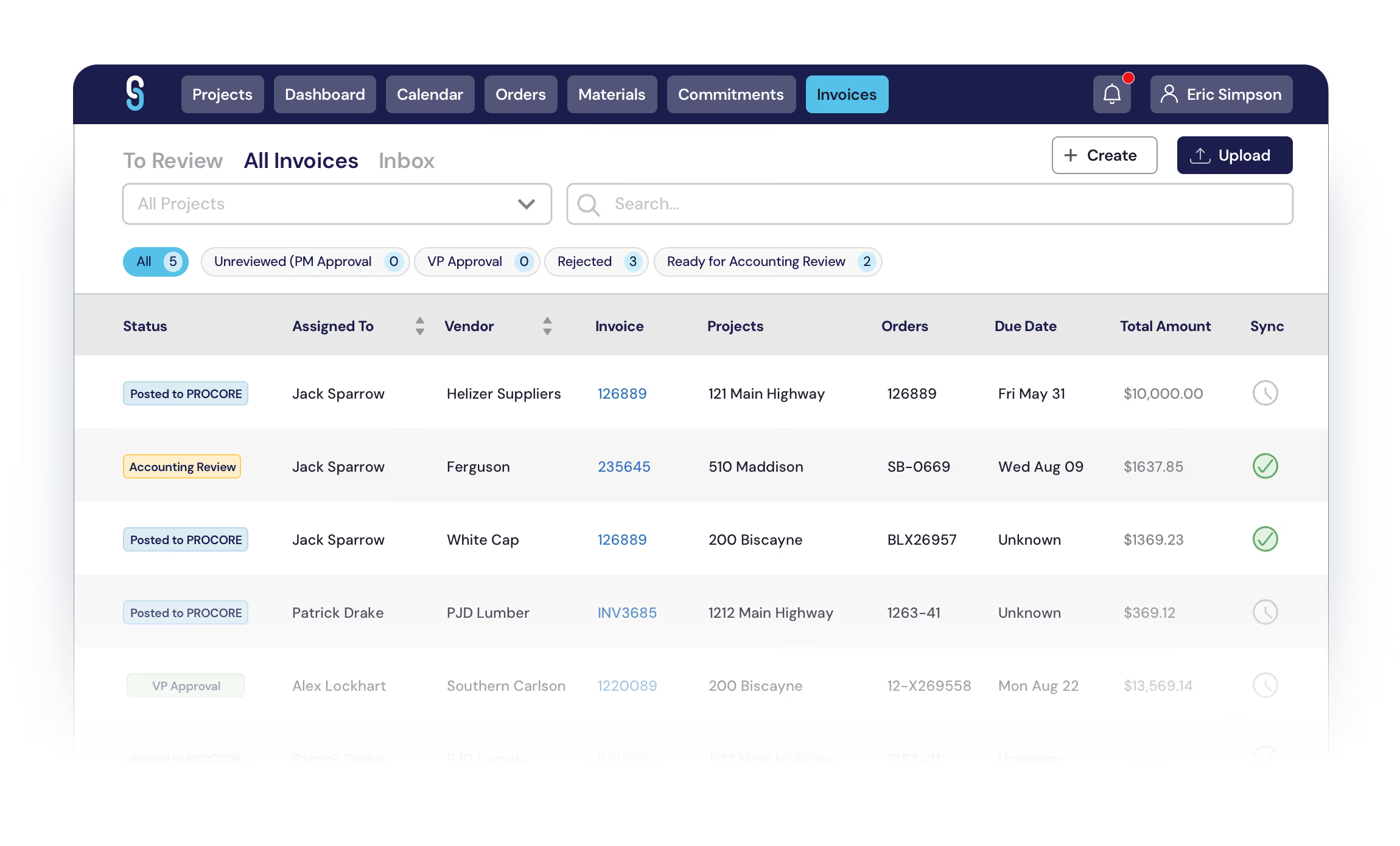
When an invoice arrives and the system already holds the approved PO, three-way matching can happen automatically. The invoice amount is compared against the PO price and the confirmed delivery quantity. If they match, it moves forward. If they don't, it flags for review. No one has to manually pull the PO and compare line by line.
That flag is where the real value sits. SubBase's price discrepancy algorithm caught $45,913.70 in overcharges for its first customer. Those overcharges existed before SubBase. They were passing through undetected because the manual process of matching invoices to POs was too slow and too inconsistent to catch them reliably. Automation didn't create a new control. It made an existing control actually work.
What it looks like in practice
XYZ Construction in Orlando was spending 12 hours a week on manual entry of material quotes. After moving to SubBase, that dropped to under two hours. But the more significant result came three months in, when the pricing data surfaced a recurring $15,000 overpayment on copper pipe. The price they were being charged had drifted above market rate, and nobody had caught it because nobody was comparing invoices against a benchmark systematically. They renegotiated the supplier contract, saving 7% on future copper purchases. Roughly $45,000 a year, found not by adding a new process but by finally having visibility into the one they already had.
The cumulative case
The argument for eliminating manual entry isn't one big number. It's a lot of smaller ones that add up across every project, every month, every year. Labor saved on data entry. Errors caught before they become payments. Overcharges flagged before they clear. Time recovered at month end because the records are already current.
None of it requires reinventing how procurement works. It requires capturing the same information in a system designed to hold it, match it, and surface problems automatically, rather than depending on someone to catch everything by hand.
Book a demo to see how SubBase handles this in practice: https://www.subbase.io/subbase-demo



Stay in touch
Sign up for our monthly newsletter to receive exclusive company updates, learn about industry trends and find out where we will be next. Don't miss out – subscribe today!

