What owners expect from procurement and reporting

What owners are actually asking for
Material procurement accounts for up to 60% of a project's total expenses. That figure alone is why owners pay attention to it. When material costs run over, the project runs over. There's no cushion big enough to absorb a procurement problem on a large development.
It's also why getting more value from material purchasing depends on knowing market pricing before you commit, well before the invoice arrives.
What owners want to see from the subcontractors they work with comes down to three things.
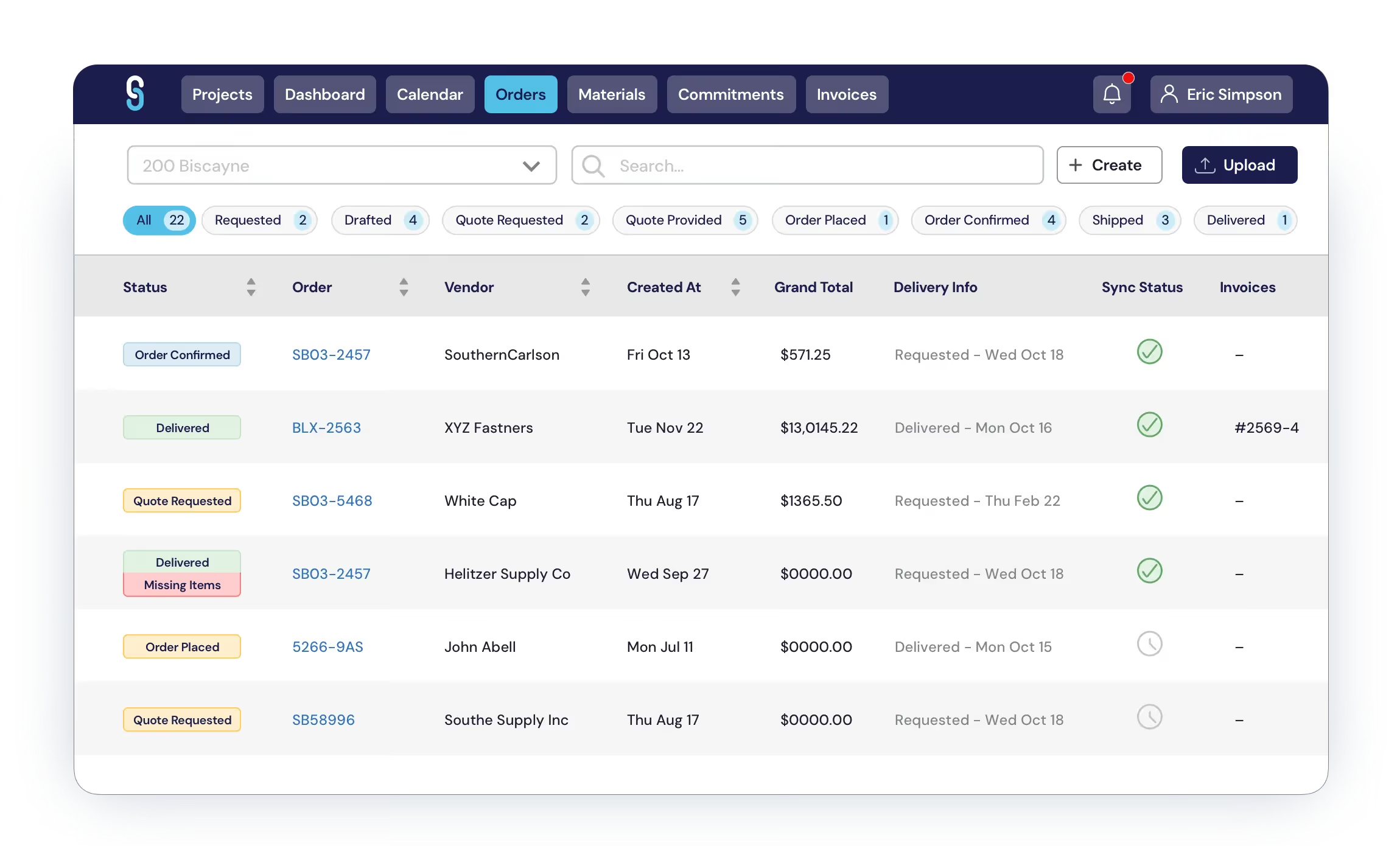
Real-time visibility into what's happening. Not a weekly summary. Not a report assembled the day before a meeting. Owners want to know where long-lead materials stand, because a delay on a critical item doesn't show up as a problem until it's already affecting the schedule. Being able to show a GC or owner the current status of every open order, in real time, without having to compile it by hand, is a different level of professional credibility than the alternative.
Accurate cost tracking throughout the job. Budget overruns that come as a surprise at the end of a project are the ones that damage relationships. Owners can deal with problems. What they can't deal with is finding out about them late. Subcontractors who can show committed spend against budget at any point in the project, by line item and cost code, are giving owners the visibility they need to manage their own financial exposure.
Committed cost tracking by line item is also what lets a PM spot an overrun while there's still budget left to adjust.
Clear, timely communication when things change. Nobody expects a construction project to go perfectly. Owners understand that. What they expect is to be kept in the loop when something shifts, whether that's a material availability issue, a price change, or a delivery that's running behind. The subcontractors who get called back on the next job are the ones who communicated proactively rather than hoping the problem would resolve itself before anyone noticed.
How this changes what subcontractors need internally
Meeting these expectations isn't just a matter of sending more emails. It requires having the data in the first place, and that means the internal procurement operation has to be running cleanly.
That's where construction procurement software earns its place, because the reporting data comes out of the purchasing process itself.
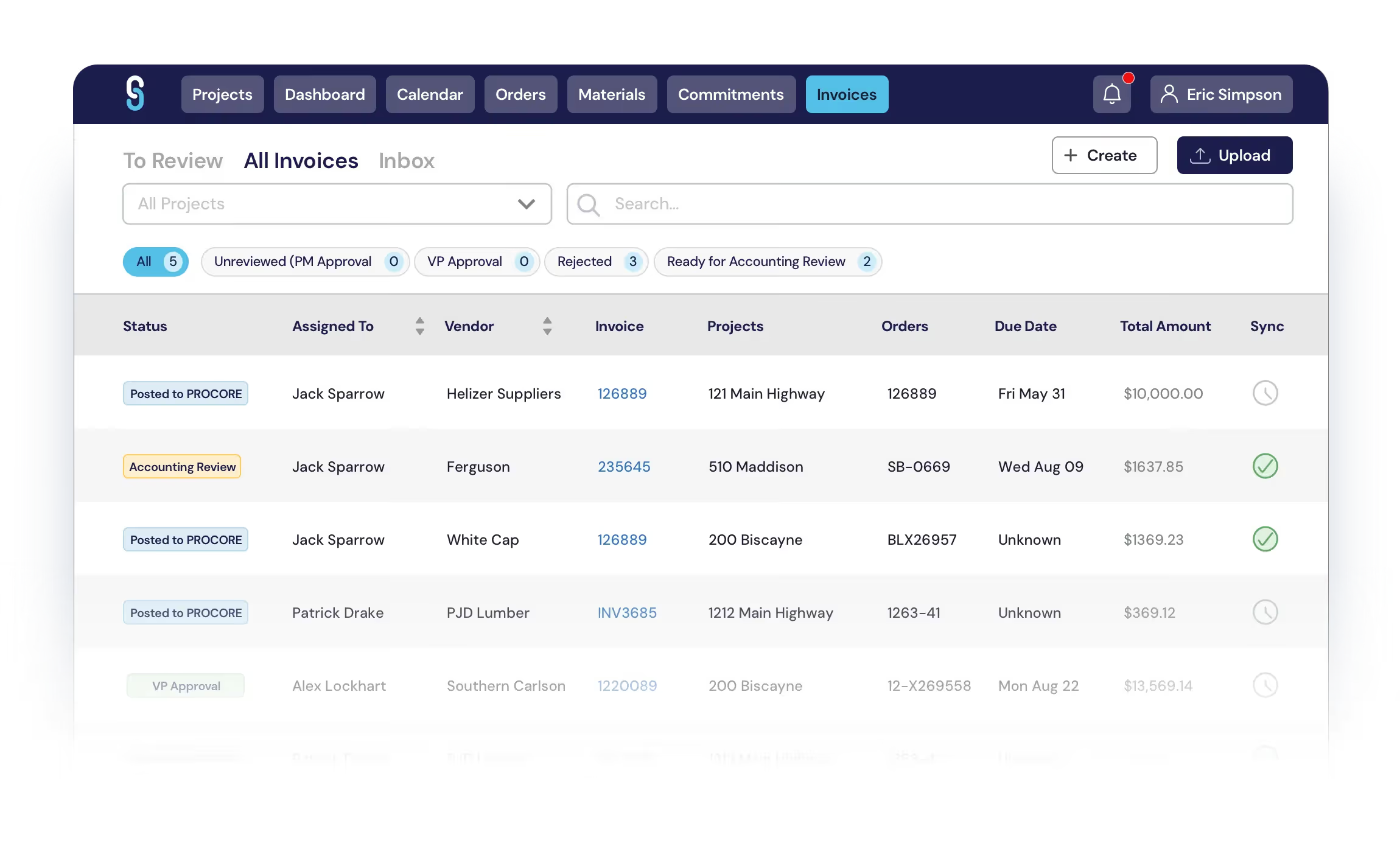
If invoice reconciliation is happening manually and running weeks behind, there's no way to give an owner an accurate picture of costs in real time. If order status lives in someone's inbox, there's no way to pull a current report without going to find it first. If cost codes aren't assigned until the invoice comes in, committed spend figures are always an estimate.
These are the procurement challenges that show up first in reporting, because a report can only be as current as the records behind it.
Each one is a piece of day-to-day friction in purchasing and AP that eventually shows up in what the owner sees.
SubBase addresses each of these gaps. Invoices are automatically matched against POs and delivery confirmations and routed through the approval workflow. Cost codes are assigned at the point of purchase. Order status, delivery confirmations, and vendor communications are all centralized in one platform. The data that owners and GCs want to see exists because the procurement process generated it in real time, not because someone assembled it after the fact.
Reporting in SubBase is customizable by project, allowing subcontractors to generate reports that reflect what a specific owner or GC needs to see, whether that's cost breakdowns by trade, timeline status on long-lead items, or invoice reconciliation progress. That flexibility matters because no two projects have exactly the same reporting requirements.
The competitive angle
Subcontractors who can demonstrate real-time procurement visibility and clean financial reporting aren't just meeting owner expectations. They're differentiating themselves from competitors who can't. When a GC is choosing between two qualified subs, the one that can show organized procurement data and a track record of clean cost management has an edge that has nothing to do with price.
Organized procurement sits high on the list of what GCs look for in subcontractors, alongside a team that's aligned and a process that holds up as the job count grows.
Organized procurement data comes up again and again in what general contractors look for in subcontractors.
The bar for what owners expect has moved. The subcontractors who recognize that and invest in the tools to meet it are the ones who keep getting the work.
Book a demo to see how SubBase works: https://www.subbase.io/subbase-demo

Stay in touch
Sign up for our monthly newsletter to receive exclusive company updates, learn about industry trends and find out where we will be next. Don't miss out – subscribe today!

