How AI is changing material tracking in construction

Where ai is doing real work in construction procurement
The most concrete application of AI in construction procurement right now is invoice matching. SubBase uses AI to capture incoming invoices and match them against the corresponding purchase order and delivery confirmation automatically. Every line item is checked. Quantities, units of measure, pricing — all verified against what was actually ordered and received.
When everything lines up, the invoice moves straight to the approval workflow without anyone touching it. When there's a discrepancy, it gets flagged immediately for review. That's three-way matching running automatically, at scale, across every invoice in the system.
Grycon's CEO named that automatic matching of invoices to POs as the thing that set SubBase apart.
The impact is measurable. The first customer to use SubBase's price discrepancy algorithm had $45,913.70 in overcharges identified and caught. That's not a rounding error. It's the kind of number that doesn't get found in a manual process because nobody has time to check every line item on every invoice against the original quote.
What this changes in practice
The accounting team stops spending their day on data entry and document chasing. Invoices don't sit in queues waiting for someone to pull the PO and make the match manually. The discrepancies that do require human attention are real ones — not noise created by a process that was never designed to catch them.
Invoice issue tracking keeps those real exceptions visible until they're resolved, so vendors and accounting see the same status.
One Miami general contractor that moved off handwritten notes and phone-call ordering named automatic invoice-to-PO matching as the main thing that set SubBase apart.
For purchasing teams, AI-assisted workflows mean historical pricing data is accessible instantly. When a new quote comes in, you can see what you paid for the same material last quarter, through which vendor, without having to search for it. That context changes the conversation with suppliers.
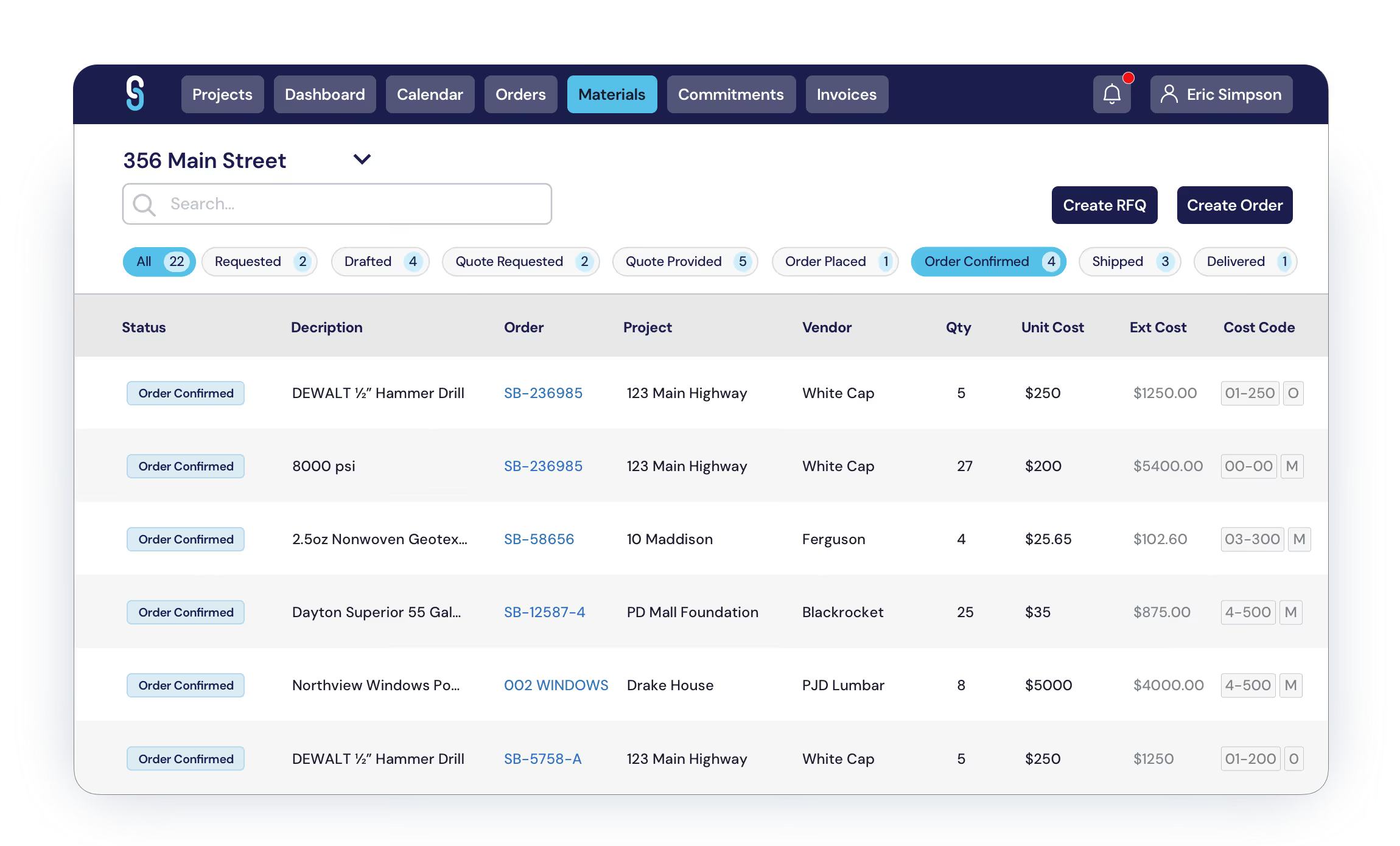
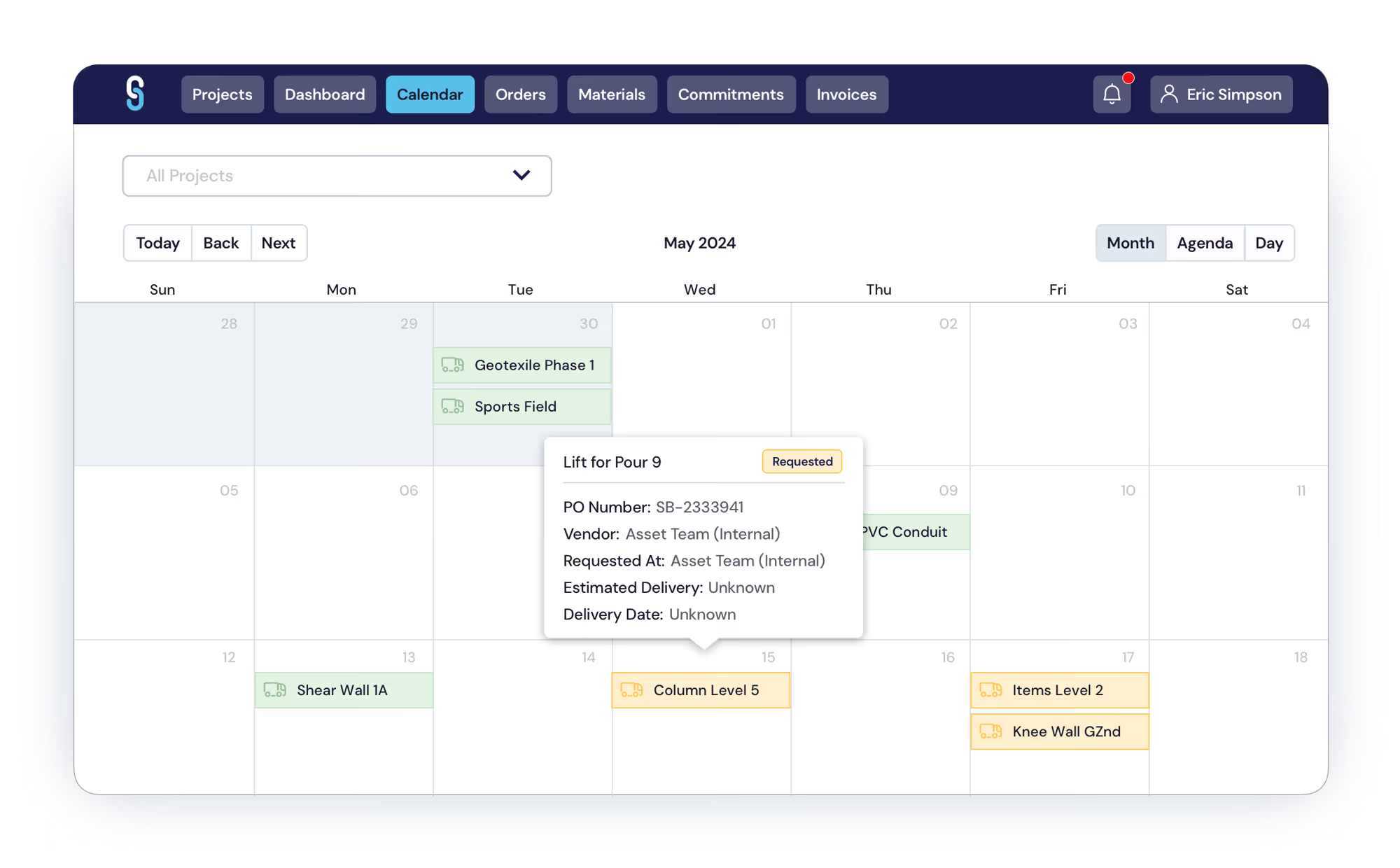
For field teams, the change is simpler: material requests go into the system and the status is visible without a phone call. Delivery confirmations happen on the phone at the moment the material arrives, and the record exists immediately for anyone who needs it.
That is what field and office collaboration looks like on an ordinary day: the same record, read from two ends of the job.
SubBase's updates to mobile material receiving were built around that moment, with a simpler delivery log and on-the-spot issue flagging.
What good implementation looks like
The technology only delivers if the workflow around it is clean. A few things consistently determine whether AI-powered tools produce the results they're capable of.
The data going in has to be accurate. AI matches invoices against POs, but if POs are being raised with inconsistent descriptions, wrong units of measure, or missing cost codes, the matches will fail or require manual correction. Getting the material catalog clean and standardized before rolling out automated matching pays back quickly.
A well-kept construction material database, with one name, unit of measure, and cost code per item, is where that cleanup usually starts.
The team needs to be aligned on the process. Automated workflows are only as reliable as the inputs that feed them. If field delivery confirmations aren't happening in the platform, the three-way match can't complete. Adoption by the field is as important as the technology itself.
Integration with the accounting system matters. The value of automated invoice processing compounds when it feeds directly into your accounting system in real time, with cost codes already assigned and approvals already completed. That's what eliminates the manual data entry step that currently sits between invoice approval and the accounting system.
The promise of AI in construction procurement isn't that it will transform the industry overnight. It's that specific, well-defined tasks — invoice matching, price discrepancy detection, cost code assignment — can be handled automatically and accurately at a scale that manual processes can't match. That frees up the people doing the work to focus on the decisions that actually require them.
That's where SubBase is focused. Not on the theory of AI in construction, but on the places where it's already doing measurable work.
Book a demo to see it in action: https://www.subbase.io/subbase-demo


Stay in touch
Sign up for our monthly newsletter to receive exclusive company updates, learn about industry trends and find out where we will be next. Don't miss out – subscribe today!

