
Optimizing your invoice management process for construction projects

Where the time goes
Most of the delay in construction invoice processing isn't caused by the approval itself. It's caused by everything that has to happen before the invoice is ready to be approved.
Someone has to locate the original PO. Someone has to confirm the materials were received and in what quantity. Someone has to check that the price on the invoice matches the price that was agreed. Someone has to assign the right cost code if it wasn't captured at the point of purchase. And if any of those steps surface a discrepancy, someone has to track down the vendor, get clarification, and wait for a response before the invoice can move forward.
Each of those steps takes time. Across a high volume of invoices, that time adds up fast. Processing an invoice manually costs approximately $21 in labor. For a subcontractor processing several hundred invoices a month, that's a significant overhead that shows up nowhere on any project report.
What needs to be true before automation works
Automated invoice processing doesn’t fix a broken upstream process. It amplifies it. If POs are going out with inconsistent descriptions, cost codes are missing, or vendor data is messy, the automation will fail more often and require more manual correction than the manual process it was meant to replace.
The foundation has to be right. That means cost codes assigned at the point of purchase, not at invoice time. It means a clean, standardized material catalog so that what’s on the invoice matches what’s on the PO. It means vendor records that are current, with no duplicates and no stale approval routing. When these things are in order, three-way matching runs automatically and accurately. When they’re not, the exceptions pile up.
This is why the operational changes and the technology changes have to happen together. SubBase handles the matching and the routing automatically — invoice comes in, gets matched against the PO and the delivery confirmation, discrepancies get flagged, clean invoices move straight to approvals. But that process works because the POs going out are accurate and the deliveries are being confirmed in the platform at the moment they arrive on site.
What faster invoice processing does for vendor relationships
Vendors are watching payment timelines. The subcontractors who pay consistently and on time, without repeated disputes or requests for clarification, are the ones who get preferential treatment when availability is tight, when pricing is negotiable, or when a delivery needs to be expedited.
A slow invoice process is often invisible from the inside. From the vendor's perspective it's very visible. Every invoice that sits in a queue for three weeks waiting on a manual match is a delay they're absorbing. When that happens repeatedly, the relationship changes.
Faster turnaround on invoices usually starts with vendor management, since duplicate supplier records and outdated approvers are what stall most matches.
Faster matching, faster approvals, and faster payment aren't just internal efficiency gains. They're relationship assets that compound over time with the suppliers you depend on.
Real-time visibility into what’s outstanding
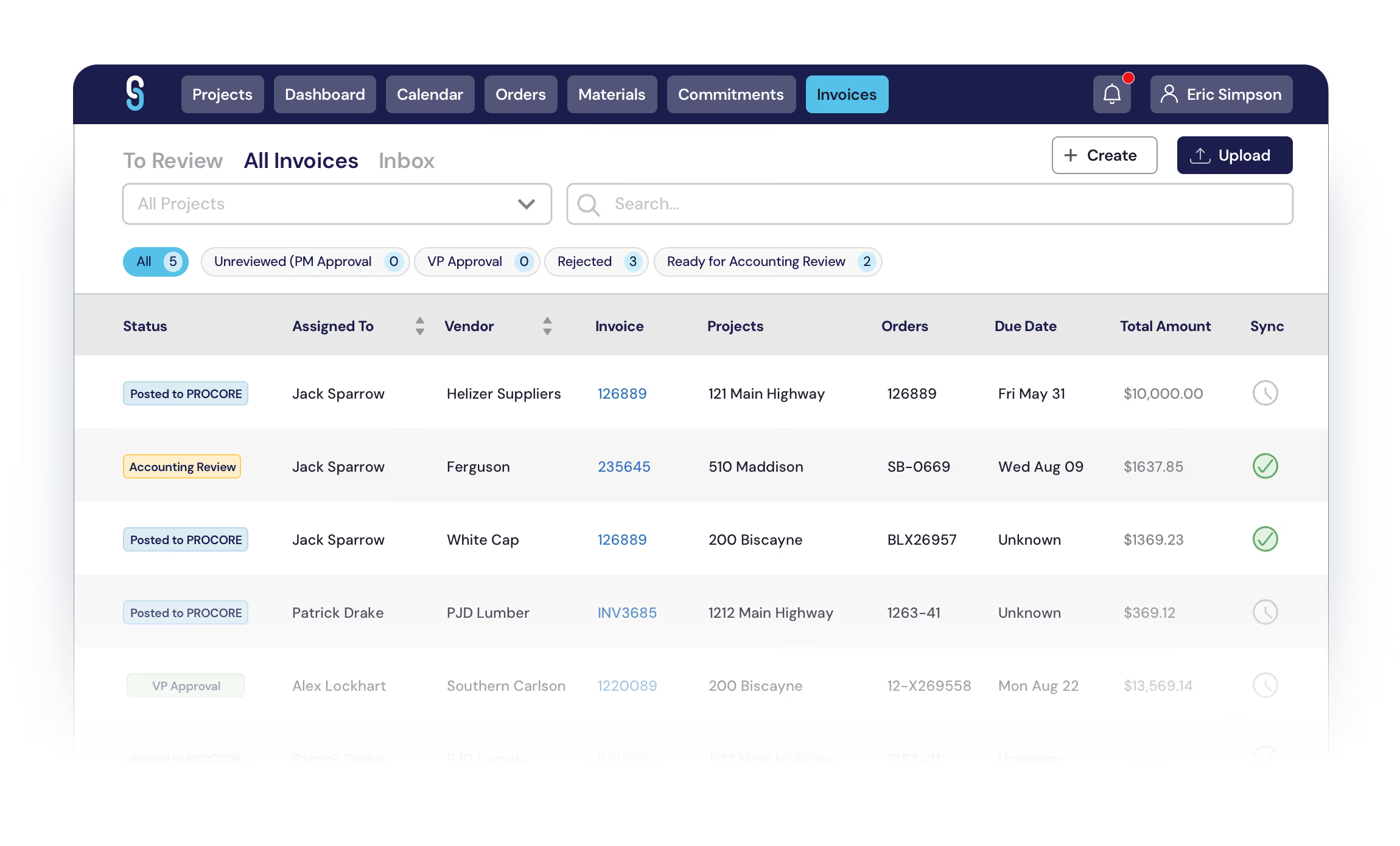
One of the most underused benefits of a properly run invoice management process is the financial visibility it creates. When invoices are matched and approved in real time rather than processed in batches at month-end, the picture of what's owed, what's been paid, and what's still outstanding is always current.
That visibility matters for cash flow management. It matters for job costing. And it matters for the conversations subcontractors have with GCs and owners about where a project's finances actually stand. JGR Construction pulled their month-end close forward three to six weeks after putting SubBase in place — not because the work got easier, but because the data was already current when the close date arrived.
Their story is a good example of automated invoice matching in a concrete contractor's accounting team.
That's the practical upside of optimized invoice management: less time closing the month, more accurate numbers throughout it, and a financial picture that reflects reality rather than lagging weeks behind it.
Book a demo to see how SubBase handles invoice management: https://www.subbase.io/subbase-demo



Stay in touch
Sign up for our monthly newsletter to receive exclusive company updates, learn about industry trends and find out where we will be next. Don't miss out – subscribe today!

