Material management: the overlooked key to project profitability
What breaks down without a system
The problems that come from unmanaged material procurement aren't dramatic. They accumulate.
Purchasing happens without locked-in pricing because nobody had time to send the RFQ before the order needed to go out. A material gets reordered because the field assumed the first delivery hadn't arrived. Inventory sits in a warehouse because nobody checked what was on hand before buying more. An invoice gets paid without being checked against the PO because the delivery ticket is somewhere on site and the month-end deadline is tomorrow.
None of these feel catastrophic in isolation. But across a company running a dozen projects simultaneously, the combined drag on margins is significant and almost entirely invisible in the financials because it never shows up as a single line item.
Material waste is one of the clearest examples, since the extra pipe or conduit left over at closeout was paid for and never billed to the client.
The cost compounds with every new project you take on. A process that was held together by one experienced purchasing manager becomes unmanageable when volume doubles. That's the growth trap: the systems that got you here aren't built for where you're trying to go.
Where visibility breaks down
The root cause of most material management problems is the same: the information exists somewhere, but not in one place, and not in real time.
A field team submits a material request and has no way to track where it goes. A vendor ships materials but the delivery isn't logged until someone finds the ticket. An invoice arrives and nobody can quickly confirm whether the materials were received, in what quantity, and at what price.
The missing delivery record carries schedule risk as well, since a crew can't plan around material the office doesn't know is late.
Each of those gaps creates work. Someone has to chase the information. Someone has to make a call. Someone has to reconcile a discrepancy that shouldn't have existed. Multiply that across the number of orders moving through the business at any given time and you have a significant portion of your team's capacity absorbed by administration that a well-run system would handle automatically.
Closing those gaps comes down to collaboration between field and office, with both sides reading and updating the same order record.
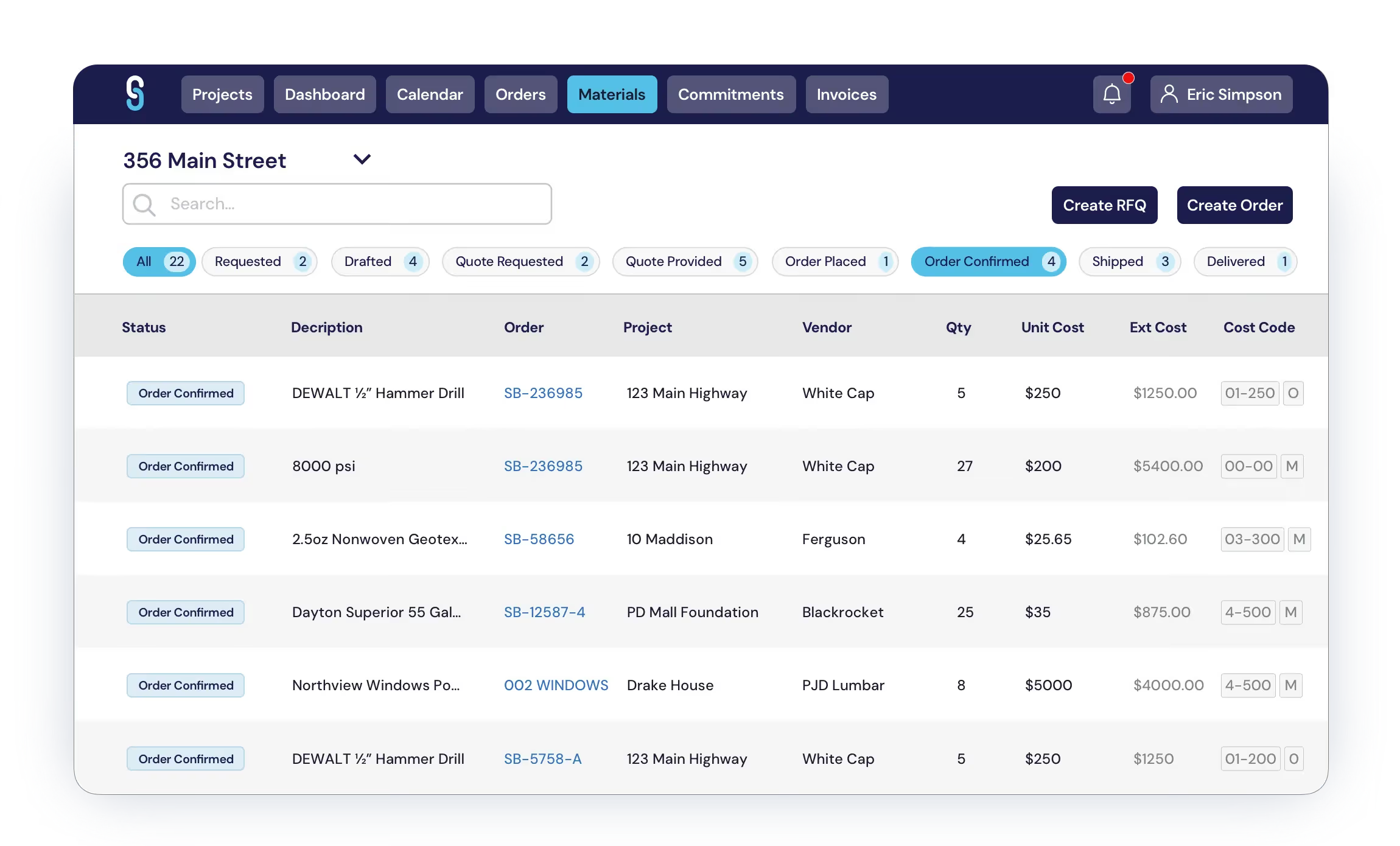
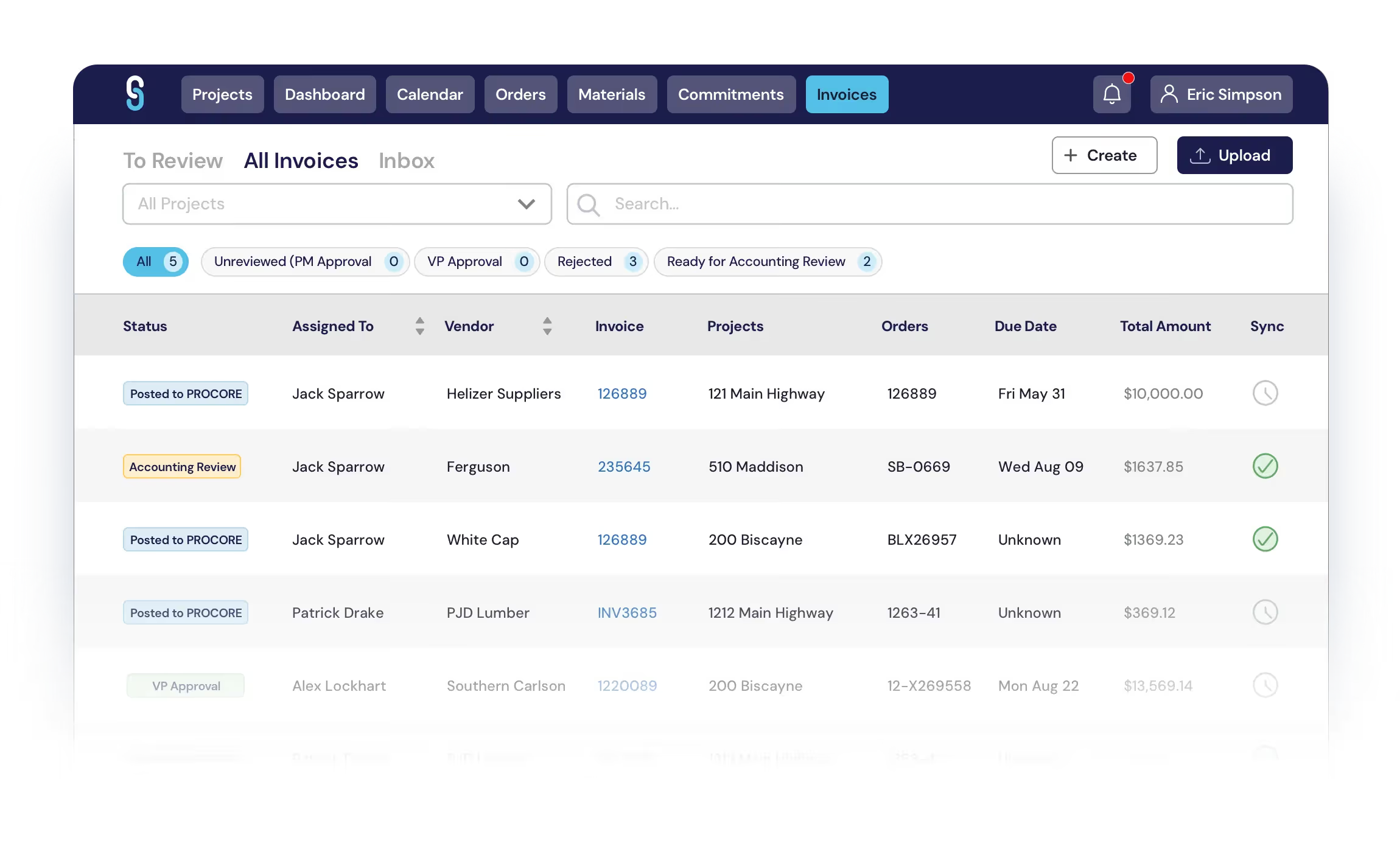
SubBase connects the full chain. Material requests, purchase orders, delivery confirmations, and invoices are all linked to the relevant project, cost codes, and budget in real time. When a delivery is confirmed in the field, the office sees it immediately. When an invoice arrives, it matches against the PO and the delivery record automatically. The information that currently requires someone to track it down is already in the system before anyone has to ask.
What tighter material control actually changes
KD Construction cut their material costs by 22% and saved over $1 million in their first year after bringing their procurement operation into SubBase. Douglas Orr Plumbing saved $189,000 in labor hours on 3,000 POs processed through the platform in a single year. JGR Construction pulled their month-end close forward three to six weeks and caught tens of thousands in billing errors in the process.
These aren't marginal improvements. They're what happens when a part of the business that was absorbing money invisibly gets brought under proper management.
Material management isn't a back-office function. For subcontractors, it's where the margin lives. The companies that treat it that way, and build the systems to support it, are the ones that can grow without the process breaking under the weight of new volume.
Book a demo to see how SubBase works: https://www.subbase.io/subbase-demo

Stay in touch
Sign up for our monthly newsletter to receive exclusive company updates, learn about industry trends and find out where we will be next. Don't miss out – subscribe today!

