
Material management: The hidden risks that can throw your whole job off schedule

How one missed delivery becomes a bigger problem
When materials don't arrive on time — or the wrong ones show up — the damage is rarely contained to a single trade or a single day.
The crew waiting on that delivery loses productive time. If they're in the critical path, other trades get squeezed. The GC asks questions. The owner starts watching. Rescheduling a delivery means finding a window that works around everything else that's now moved. And if the original order was placed verbally or by text with no record either side can reference cleanly, resolving the discrepancy with the vendor adds another layer to an already messy situation.
None of that shows up as a single line item anywhere. It shows up as a job that finished late, a margin that came in thinner than the bid, and a GC relationship that has a new reason for friction.
Why it keeps happening
The root cause on most sites is two things operating simultaneously: no single source of truth, and too many manual steps to maintain one.
The office is placing orders based on what purchasing knows. The field is working based on what they've seen delivered. Those two pictures don't automatically reconcile. A delivery shows up, someone signs the ticket, it goes in a truck or a toolbox, and the office doesn't find out until the invoice arrives — if they find out at all before then.
Meanwhile, another order goes out for the same material because the field doesn't know the first one is already confirmed. Or a delivery doesn't show up and nobody knows whether it was ever ordered or just assumed. Or it does arrive but the quantity is short and the only record is a handwritten ticket that doesn't match anything in the system.
These aren't unusual scenarios. They're the normal operating condition for teams without a connected material management workflow. And they're expensive in ways that are hard to see clearly until the job is done and the postmortem tells a story nobody wanted to read.
What a connected workflow changes
When field requests, purchase orders, delivery confirmations, and invoices all live in the same system, the gaps that cause the problems above close.
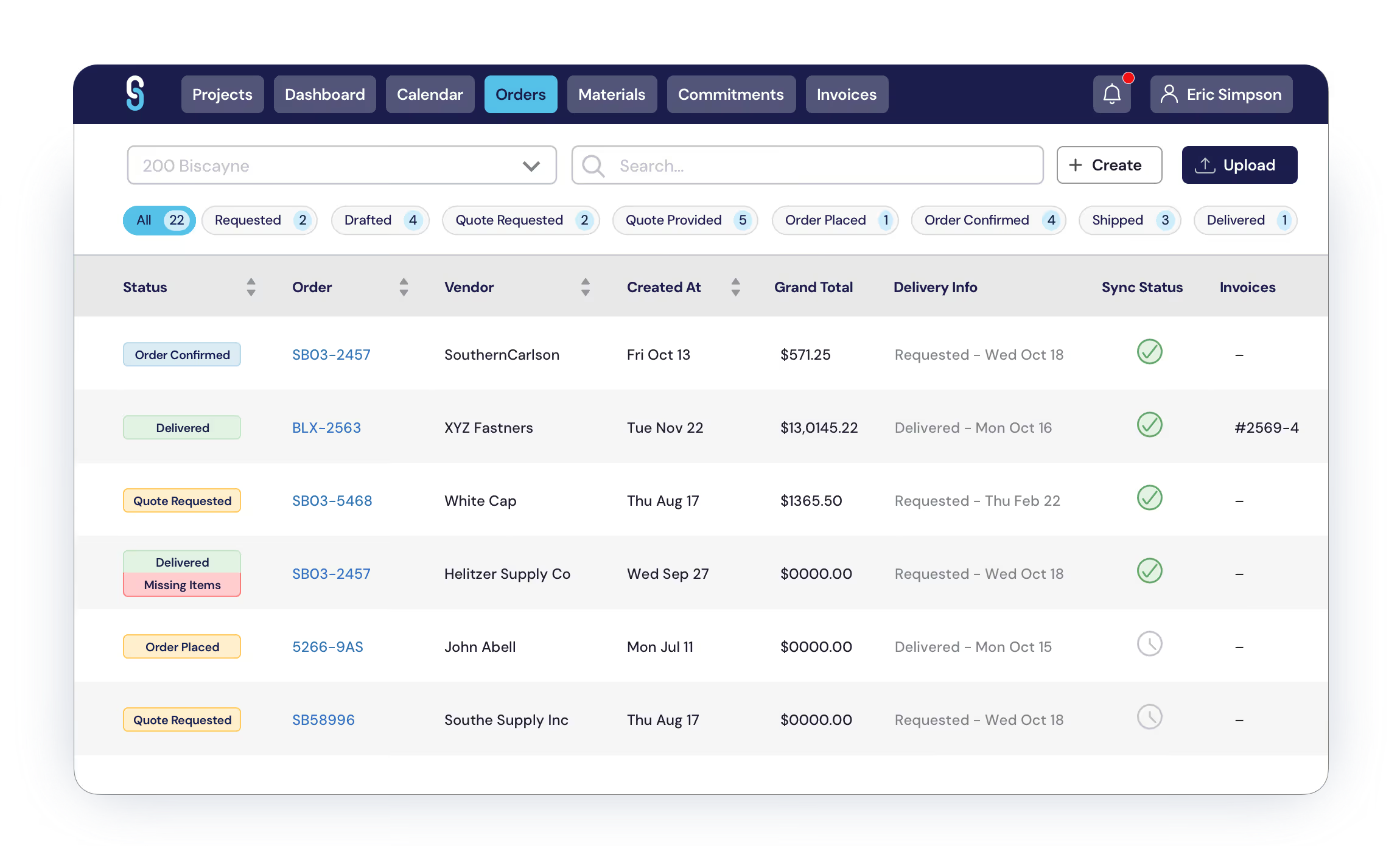
The field submits requests from their phone. They can see the status of what they've requested without calling the office. The office sees every open order across all active projects, with delivery dates and confirmation status visible at a glance. When a delivery arrives, the field confirms it in the platform immediately — not on a paper ticket that will be processed later. The office sees the confirmation in real time and the invoice match can happen against an actual record rather than a best guess.
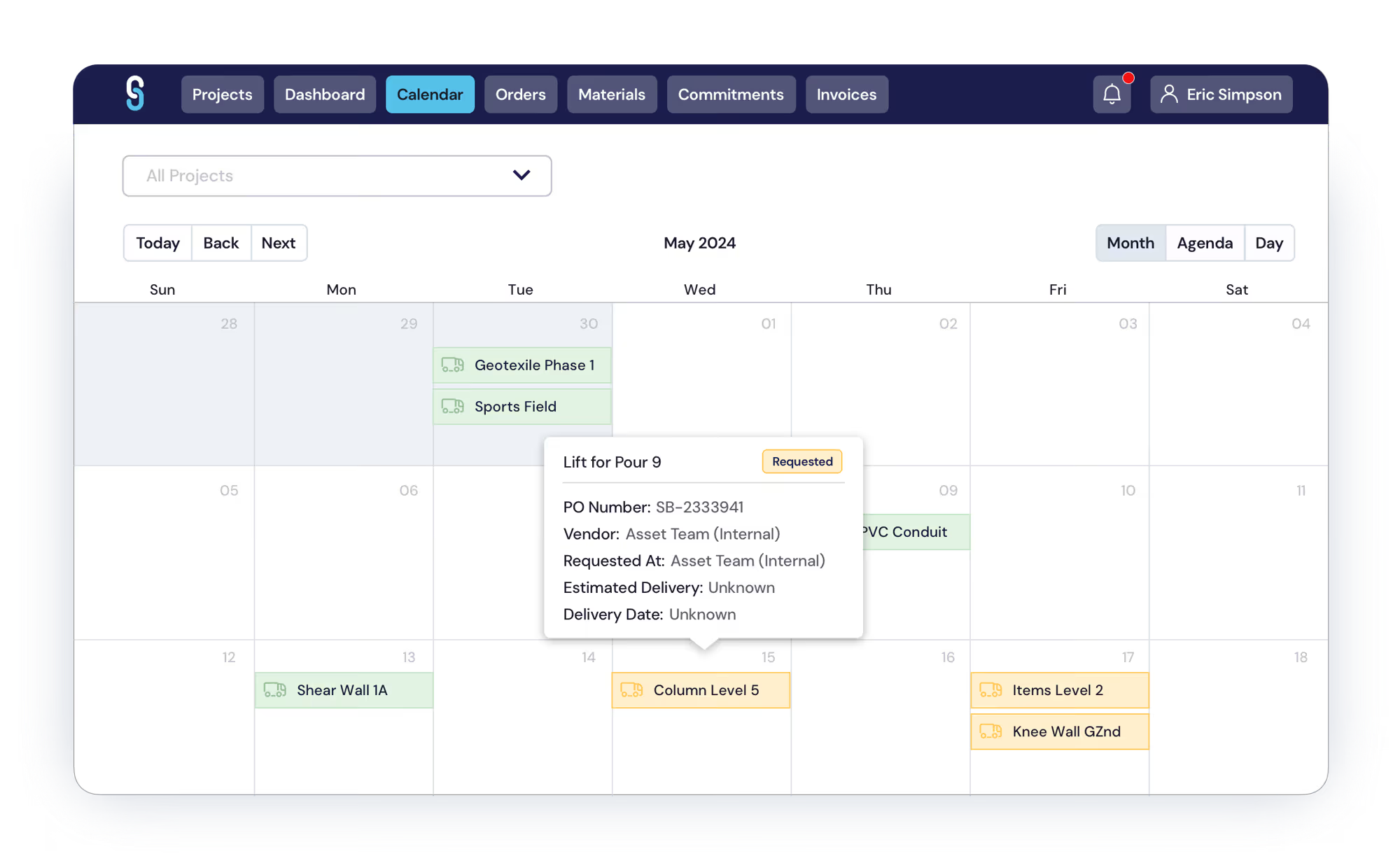
A shared delivery calendar means nobody is planning around assumptions about what's arrived. When something changes — a delivery pushed out, a quantity short, a substitution — it's visible to everyone immediately, not after a chain of phone calls has gone around the team.
The result isn't a perfect job. Construction doesn't work that way. But when a problem surfaces — and it will — you're dealing with it while there's still time to do something about it, not discovering it at month-end or during a dispute with a vendor over an invoice from six weeks ago.
Material management risk is mostly invisible until it isn't. The jobs that run cleanly aren't the ones where nothing goes wrong. They're the ones where the team has enough visibility to catch problems early and respond before the schedule pays for it.
That's what SubBase is built to support.
Book a demo to see how it works: https://www.subbase.io/subbase-demo


Stay in touch
Sign up for our monthly newsletter to receive exclusive company updates, learn about industry trends and find out where we will be next. Don't miss out – subscribe today!

