Leveraging automation for a competitive edge

Where the time is going
A busy subcontractor processing hundreds of POs a month is generating an enormous amount of data. Order statuses. Delivery confirmations. Vendor responses. Invoice approvals. Every one of those data points needs to be captured, tracked, and reflected somewhere in the system.
When that happens manually, it's slow, error-prone, and dependent on whoever happens to be sitting at the right desk at the right time. When an invoice sits waiting for someone to manually pull the PO and confirm the match, that's not a minor inefficiency. At approximately $21 in labor per invoice processed by hand, it adds up fast.
The companies pulling ahead aren't doing more. They're doing the same work with fewer manual steps.
What automation actually looks like in SubBase
The most impactful automation in SubBase is invoice reconciliation. When an invoice comes in, SubBase matches it against the PO and delivery confirmation automatically. If it matches, it routes straight to the approval workflow. If there's a discrepancy, it gets flagged for review. No manual data entry. No hunting through email for the original order. The process moves without anyone pushing it.
Beyond reconciliation, automation runs through the entire procurement workflow:
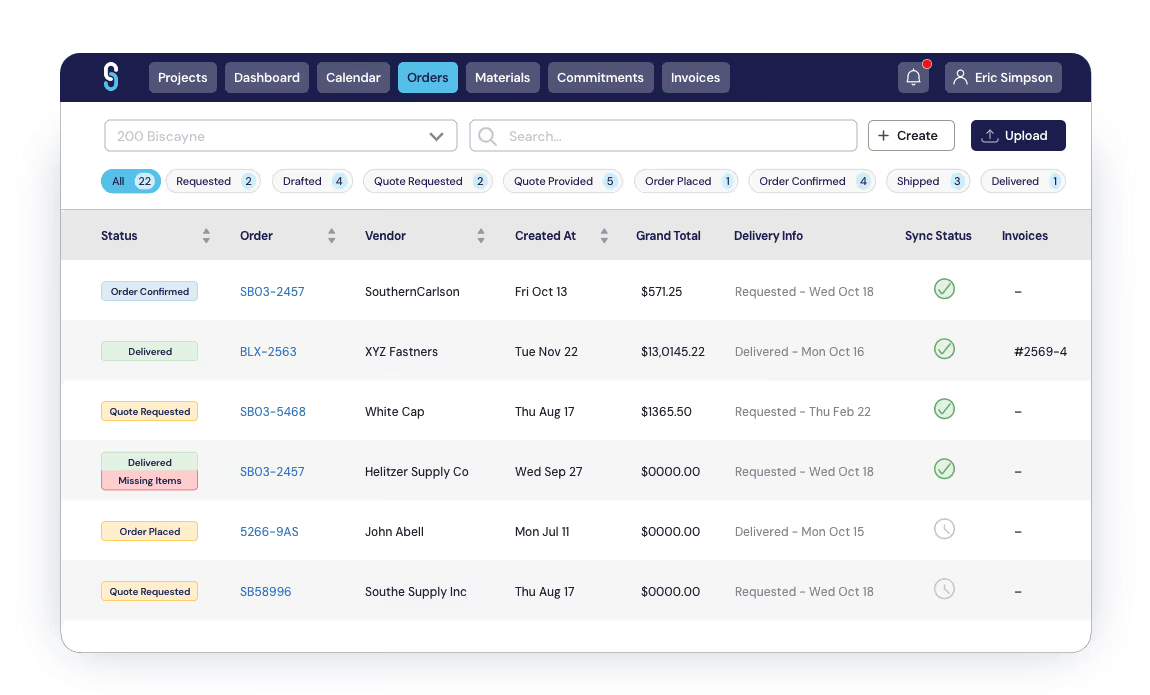
Material database queries are automated, so field teams can find and request items without manually entering descriptions that may or may not match what's in the system. Order logs update in real time, so everyone, field, office, and accounting, can see the status of an order without calling someone to ask. Historical pricing is accessible instantly, so buyers can see what they paid last time before committing to a new quote.
Each of these individually is a modest time saving. Across hundreds of orders a month, they compound into something significant.
The collaboration effect
One of the less obvious benefits of automation is what it does to communication. When order logs update automatically and everyone is looking at the same real-time data, the number of "where does that order stand?" conversations drops sharply. Field teams don't need to call the office to find out if their material has been confirmed. The office doesn't need to chase the field for delivery confirmations. The information is already there.
That's not a soft benefit. Every phone call that doesn't need to happen is time saved on both ends. Every invoice that doesn't sit waiting for a manual match is a vendor paid faster and a cash flow picture that's more accurate.
The invoice inbox is where that shows up day to day, with each invoice's status visible instead of buried in someone's email.
The competitive advantage
Contractors using automated procurement workflows can respond faster, bid more accurately, and present a cleaner operation to the general contractors they work with. When you can show a GC real-time visibility into your committed spend, outstanding invoices, and delivery status across all active projects, that's a different conversation than the one your competitor is having while they're still running things through spreadsheets.
That conversation lines up with what general contractors look for when they build a preferred list: subs who can answer questions about spend and delivery status without calling back later.
It also matters for hiring. The best people in purchasing and accounting don't want to spend their careers on manual data entry. A modern procurement workflow is part of what makes a company worth working for.
The companies still doing this by hand aren't just slower. They're carrying costs, in labor, in errors, and in missed discrepancies, that their competitors aren't. That gap widens every year.
Book a demo to see SubBase in action: https://www.subbase.io/subbase-demo


Stay in touch
Sign up for our monthly newsletter to receive exclusive company updates, learn about industry trends and find out where we will be next. Don't miss out – subscribe today!

