
Improving communication with vendors for better procurement process

What makes vendor communication hard in construction specifically
Construction procurement involves a lot of simultaneous moving pieces. Multiple vendors, multiple projects, multiple people with purchasing authority, and a field team that needs material now, not after it's been through a three-day email chain.
The field super who needs to know if an order has been confirmed doesn't have access to the purchasing manager's inbox. The purchasing manager who needs to know if a delivery showed up correctly can't see the field super's text thread with the driver. Accounting, trying to match an invoice, has no visibility into the price revision the supplier mentioned on a call last Tuesday.
Each person involved in the transaction has part of the picture. Nobody has all of it. And when something goes wrong — a delivery that doesn't match the order, a price discrepancy on an invoice, a backorder that was never communicated — reconstructing what happened requires tracking down conversations scattered across five different channels.
Meanwhile the crew waiting on that material sits idle, and the schedule absorbs a material management risk that started as a missed message.
What centralizing vendor communication actually changes
When all vendor communication runs through the same platform as the transactions it relates to, the information problem largely resolves itself.
That's the core idea behind construction procurement software: the conversation and the transaction live in the same record.
A quote request goes out through SubBase. The vendor responds in the platform. The response is attached to the relevant project and visible to everyone with access, not just the person who sent the RFQ. When the PO goes out, it goes through the same channel. If the vendor has a question about the order, they raise it in the platform and it's attached to the PO record. If there's a delivery issue, the field flags it in the platform and the note is linked to the order it relates to.
Nobody has to reconstruct what was said. The record exists, it's accurate, and it's accessible to anyone who needs it — purchasing, accounting, the field, and the vendor — without a phone call to ask.
This matters most in the exception cases. When an invoice arrives with a price that doesn't match the PO, the question is whether the price was revised and whether anyone authorized it. In a centralized system, the answer is a lookup. In a scattered communication environment, it's a half-day investigation that may or may not produce a clear answer.
The vendor side of the equation
Vendors work with a lot of subcontractors. The ones they go out of their way for, the ones who get a call when there's a material shortage or an opportunity to lock in pricing before a price increase, are the ones who are easy to work with.
That early call carries more weight during periods of material price volatility, when a few weeks can change what a job costs.
Easy to work with means: orders come in clearly specified, with the right information the first time. Questions get answered promptly by someone with authority to answer them. Invoices get processed without disputes that drag out for weeks. Payments arrive on the timeline that was agreed.
Most of that comes down to how organized the procurement operation is internally. When vendor communications are centralized and tied to the relevant transactions, the clarity vendors experience on their end improves directly. They spend less time chasing confirmations, less time clarifying ambiguous orders, and less time waiting to find out if an invoice dispute has been resolved.
That operational reputation builds over time. It's not a soft benefit. It affects pricing conversations, availability during tight supply periods, and the quality of the working relationship on every job that follows.
That's why strong vendor relationships sit alongside price comparison as one of the ways to maximize value in construction procurement.
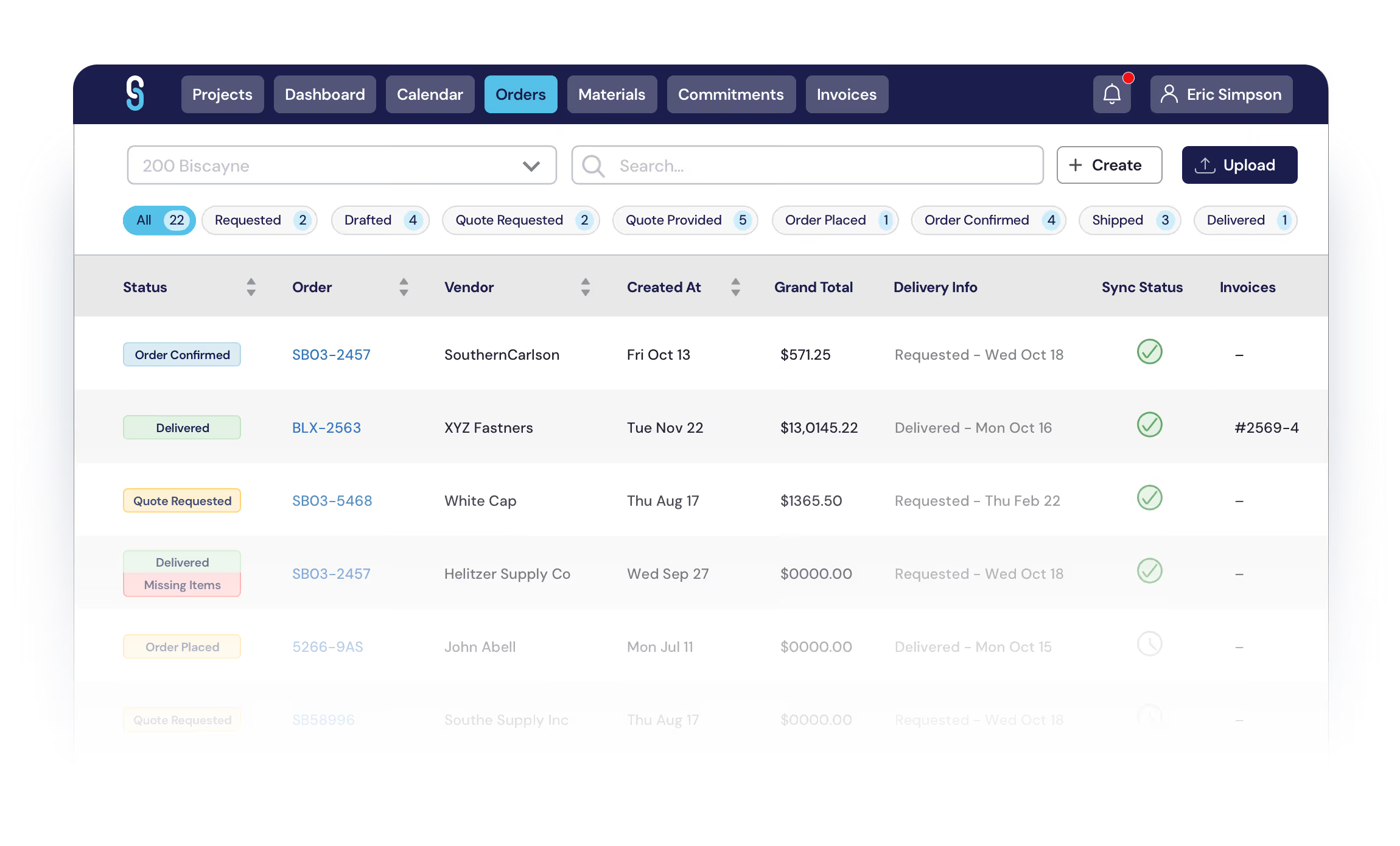
The technology fix for vendor communication is straightforward: one platform, all stakeholders, all conversations attached to the transactions they relate to. The harder part is the discipline to use it consistently — making sure orders go out through the platform rather than by text, making sure responses get captured rather than living in someone's inbox, making sure the field and office are both looking at the same record.
Managing vendors with construction procurement software puts that record where vendors can see it too, so confirmations and changes don't depend on one person's phone.
That's the practical case for construction vendor management that runs through one platform rather than across inboxes and text threads.
SubBase is built to make that consistency as low-friction as possible, because the value of centralized communication only compounds when everyone is actually in the same place.
Book a demo to see how SubBase handles vendor communication: https://www.subbase.io/subbase-demo

Stay in touch
Sign up for our monthly newsletter to receive exclusive company updates, learn about industry trends and find out where we will be next. Don't miss out – subscribe today!

