
How to foster collaboration between field teams and office staff

Where material procurement sits in all of this
Procurement touches every department. Field teams request material. Purchasing managers cut POs. Accounting reconciles invoices. Suppliers sit at the other end of all of it. About 40% of a subcontractor's daily operations run through procurement in some form.
In some companies, that's centralized under a dedicated purchasing manager. In others, PMs and supers handle it at the project level. Either way, the process is the same. And when it breaks down, everyone feels it.
The field usually feels it first, which is why field operations efficiency depends on how cleanly a super's request reaches purchasing.

Where the divide comes from
Field teams communicate by text, phone, and verbal updates on site. Office staff track orders and invoices in different systems. Neither side has a complete picture, and the space between them is where errors live.
Those errors resurface as reporting hurdles later, when a PM asks for committed spend and the numbers have to be pieced together.
The worst friction point is invoice reconciliation. POs don't match delivery tickets. Delivery tickets don't match invoices. Nobody can find the original receiver. By the time it gets sorted, someone's chasing a discrepancy that's weeks old.
Construction invoice reconciliation only works when the PO, the delivery record, and the invoice can be pulled up together, which is where field and office records have to meet.
It's one of the most common construction procurement bottlenecks, and one that gets harder to unwind the longer it sits.
How to actually close the gap
Collaboration between field and office comes down to four things:
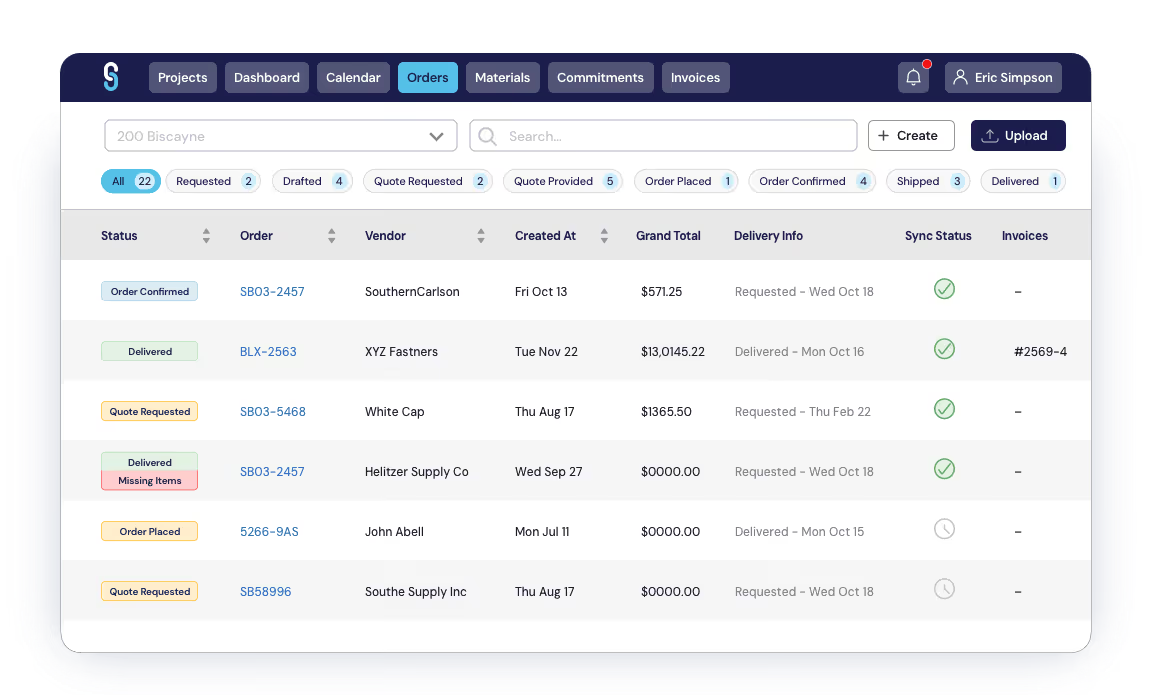
One platform for everyone. Field supers can view their orders and message vendors in one place. Purchasing managers see across all projects. Accounting tracks invoices and POs without hunting through email. Nobody is working off a separate system or a spreadsheet that's three days out of date.
Real-time updates. When a delivery is confirmed in the field, the office sees it immediately. Logging deliveries from the field, with backorders and missing items flagged on the spot, also gives purchasing a head start on the follow-up with the vendor.
When an invoice comes in, it routes straight to the approval workflow. No lag. No "I thought you handled that."
Views that match the role. Field teams see their orders and nothing else. Purchasing gets the full cross-project picture. Accounting sees what's in the queue for payment. Everyone gets the information they need without wading through everything they don't.
Vendor communication in one place. Pricing confirmations, order updates, and supplier messages all sit inside the platform. No more digging through email chains to find out what a vendor said three weeks ago about a price change.

Why it matters
Every construction project is different. New site, new scope, new set of problems. What doesn't change is the need for field and office to stay aligned as those problems come up. When they're not, materials get reordered unnecessarily, billing errors go uncaught, and month-end close turns into a forensic exercise.
GCs notice that too, and field-office alignment is one of the traits GCs look for in subcontractors when deciding who gets the next job.
JGR Construction pulled their month-end close forward three to six weeks after implementing SubBase, and caught tens of thousands in billing errors in the process. That's what happens when the data stops living in silos and starts living in one place.
Book a demo to see SubBase in action: https://www.subbase.io/subbase-demo


Stay in touch
Sign up for our monthly newsletter to receive exclusive company updates, learn about industry trends and find out where we will be next. Don't miss out – subscribe today!

