
Five bottlenecks killing your margins (and how to fix them)

Bottleneck 1: field and office working off different information
Your foreman texts the PM. The PM emails the purchasing agent. The purchasing agent calls the supplier. Somewhere in that chain, the receiver gets lost, the delivery goes unconfirmed, and three weeks later accounting is chasing a discrepancy nobody can explain.
The problem isn't that people aren't communicating. It's that they're communicating across five different channels with no single record anyone can trust.
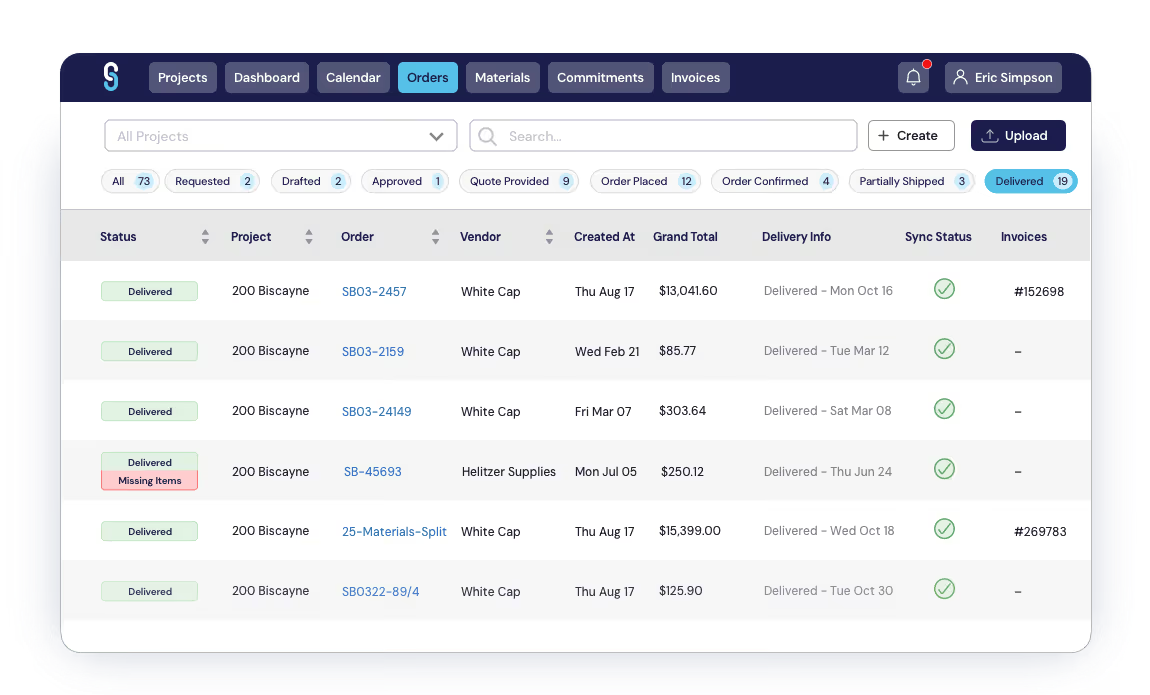
With SubBase, the field confirms deliveries directly in the system. The office sees it immediately. No paper receivers waiting on someone's truck seat. No phone calls asking "did that lumber show up?" The record exists the moment the material hits the site.
That single step does more for field operations than most teams expect, because it's also the record accounting needs to close the three-way match.
Bottleneck 2: Cost codes that don’t get assigned until it’s too late
By the time an invoice lands in accounting, the cost codes should already be there. They usually aren't.
A single PO can have a dozen line items across different cost codes. Doing that manually, at the end of the process, when someone's trying to close the month, is where errors happen and forecasting breaks down. Most teams have no real-time visibility into committed spend because the coding hasn't caught up yet.
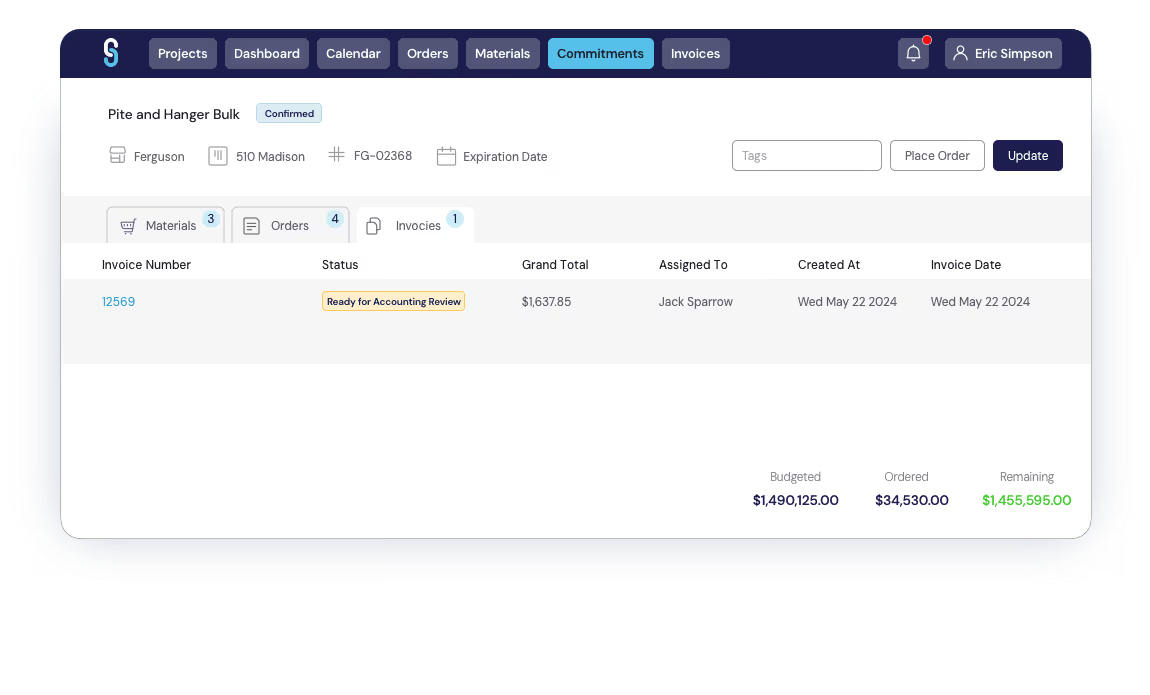
SubBase assigns cost codes at the point of purchase, not at the point of payment. Every line item is coded when the order goes out. By the time the invoice arrives, the work is already done. Your accounting team isn't deciphering handwritten notes on a delivery ticket. Your PM can see committed spend against budget in real time, not six weeks later.

Bottleneck 3: Pricing that isn’t locked down before work starts
Post-COVID, most suppliers won't hold pricing for long. That means blind POs, last-minute price surprises, and budgets that drift from the moment material starts moving. Tariffs on construction materials make that drift harder to predict, because a quote that held last month may not reflect what the supplier is paying now.
Getting competing quotes before every PO is one of the simplest procurement best practices for holding that line.
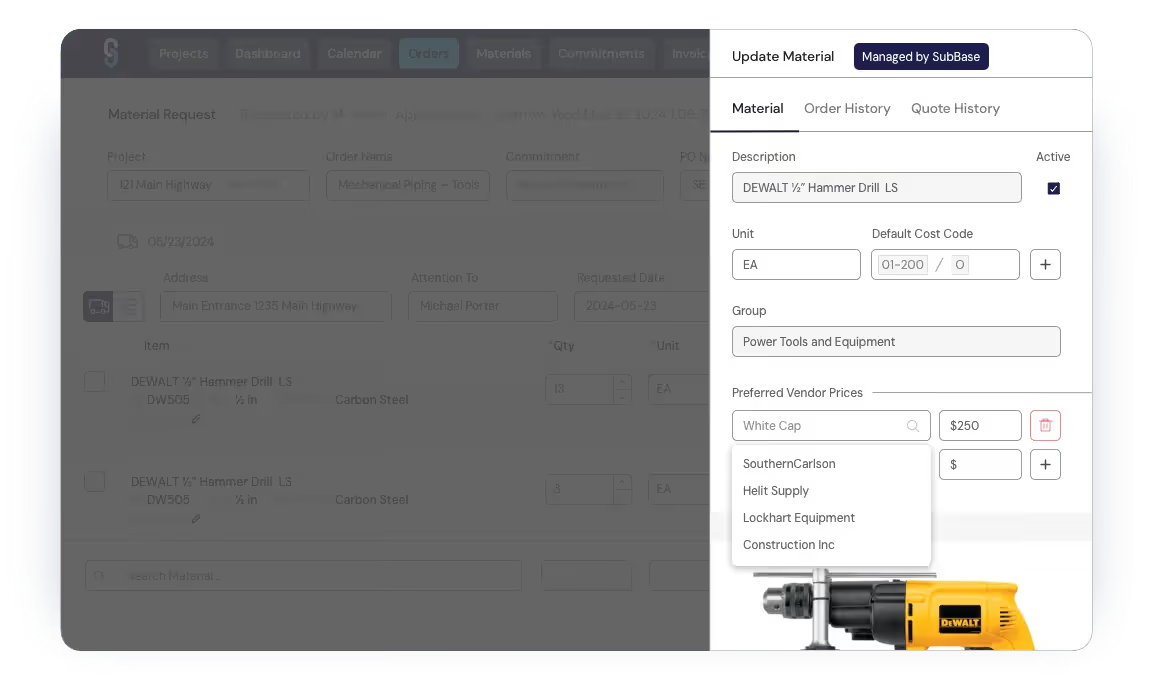
SubBase gives buyers a structured way to send RFQs, get vendor responses, and lock in pricing before a PO goes out. All vendor communication runs through the platform. Historical pricing is visible, so you can see what you paid last time and whether what you're being quoted now is in line. When the price discrepancy algorithm flags something, it's not a gut feeling. It's a number. One customer caught $45,913.70 in overcharges in their first year.
Vendor relationships don't get replaced. They get organized. Buyers still work with their trusted suppliers. They just do it in a way that creates a paper trail and catches the gaps.
G&E Contractors, a South Florida concrete company, made exactly that shift from texting vendors for prices to comparing every response on one screen.
One South Florida concrete contractor now sends a single RFQ and sees every vendor's quote on one screen, so the project manager can compare prices and approve the right one quickly.
Bottleneck 4: Invoice reconciliation done by hand
Every invoice that gets processed manually costs approximately $21 in labor. That's not a figure anyone tracks, which is part of why it doesn't feel like a problem until you do the math. Multiply that by your invoice volume for a month and you're looking at a number that's hard to ignore.
The real cost isn't just the labor. It's the time invoices spend waiting. Waiting for someone to pull the PO. Waiting for a match to the receiver. Waiting for the right person to approve it. Meanwhile, vendors are aging out and your cash flow picture is weeks behind where it should be.
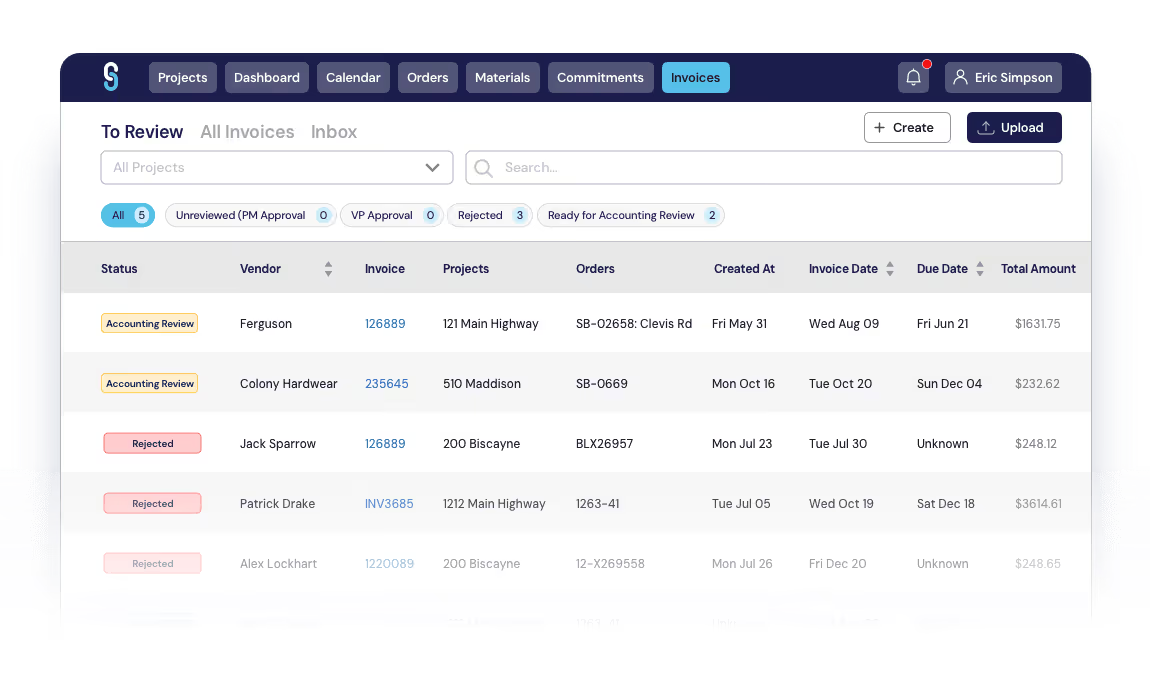
SubBase runs three-way matching automatically. Invoice comes in, it gets matched against the PO and the receiver, and it routes directly to the approval workflow. No manual data entry. No hunting for paperwork. JGR Construction pulled their month-end close forward three to six weeks after implementation, and caught tens of thousands in billing errors in the process.
JGR Construction's controller has described the change as being able to compare the invoice, the PO, and the delivery tickets in one system.
Bottleneck 5: Material requests that disappear into a black hole
A field worker needs material. They call the office. Or text. Or write it on a piece of paper and hope it makes it back to someone with purchasing authority. Half the time, nobody knows where the request stands until the guy in the field calls again, frustrated, because the job is waiting on material that may or may not have been ordered.
With SubBase, field workers submit requests directly through the platform. The office sees it instantly. Approvals route automatically based on predefined rules. Once approved, the PO goes out. The field worker can see where their request stands without picking up the phone.
One Florida high-rise builder runs that whole path, from field request to quote, PO, and invoice, through a Procore-connected purchasing workflow.
Less back-and-forth. Fewer delays. And nobody's sitting on a job site waiting on material that got lost in someone's text thread.
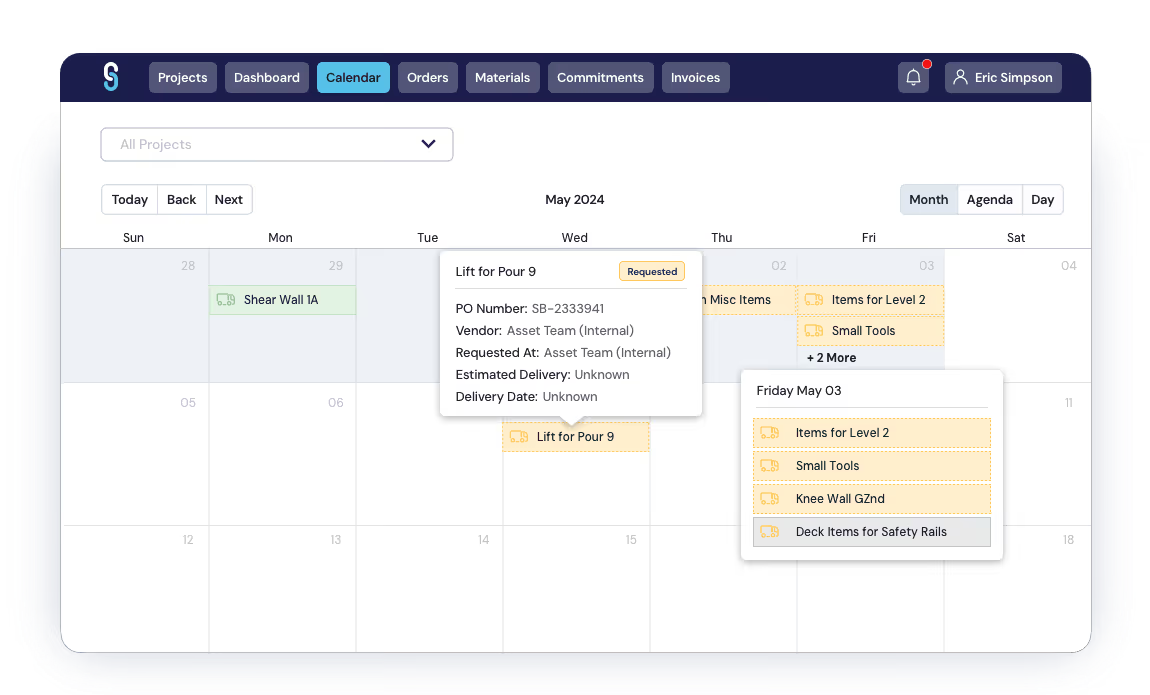
These aren't edge cases. They're the everyday friction that compounds across every project, every month, every year. SubBase was built to fix exactly this, by people who lived it firsthand.
Book a demo to see it in action: https://www.subbase.io/subbase-demo



Stay in touch
Sign up for our monthly newsletter to receive exclusive company updates, learn about industry trends and find out where we will be next. Don't miss out – subscribe today!

