
Cost codes: How are you managing your spend?

How subbase handles it
Point of purchase cost code assignment. When a purchase order is raised in SubBase, cost codes are assigned right there, at the moment of purchase. Not at invoice day. Not when accounting is trying to close the month. When the order goes out. For frequently ordered items, the process is automated entirely, the cost code pre-fills and the order moves without anyone touching it.
Automated invoice reconciliation. Because the cost code is already assigned at the PO level, reconciling the invoice against it is automatic. Accounting isn't manually matching paperwork or chasing down what code applies to which line item. The work is already done.
Reporting down to the line item. You can run reports by PO, line item, project, or vendor. Every material order is visible, at cost, by project, by cost code. If something was ordered and not delivered, it shows up. If a line item is running over, you see it before the invoice lands, not after.
Approvals that enforce accuracy. Nothing gets approved in SubBase unless the cost codes are correctly assigned. That one constraint eliminates the back-and-forth between accounting and project managers that happens when codes are missing or wrong. It also means the data flowing into your accounting system is clean from the start.
Integration with your existing systems. SubBase connects to your accounting system and maps to your existing cost code structure, whether you run hyper-specific codes by project phase and building or keep it simpler. The platform adapts to how your company already works.
Grycon, a Miami general contractor that already ran detailed cost codes, described the switch as mostly a matter of importing its existing data.
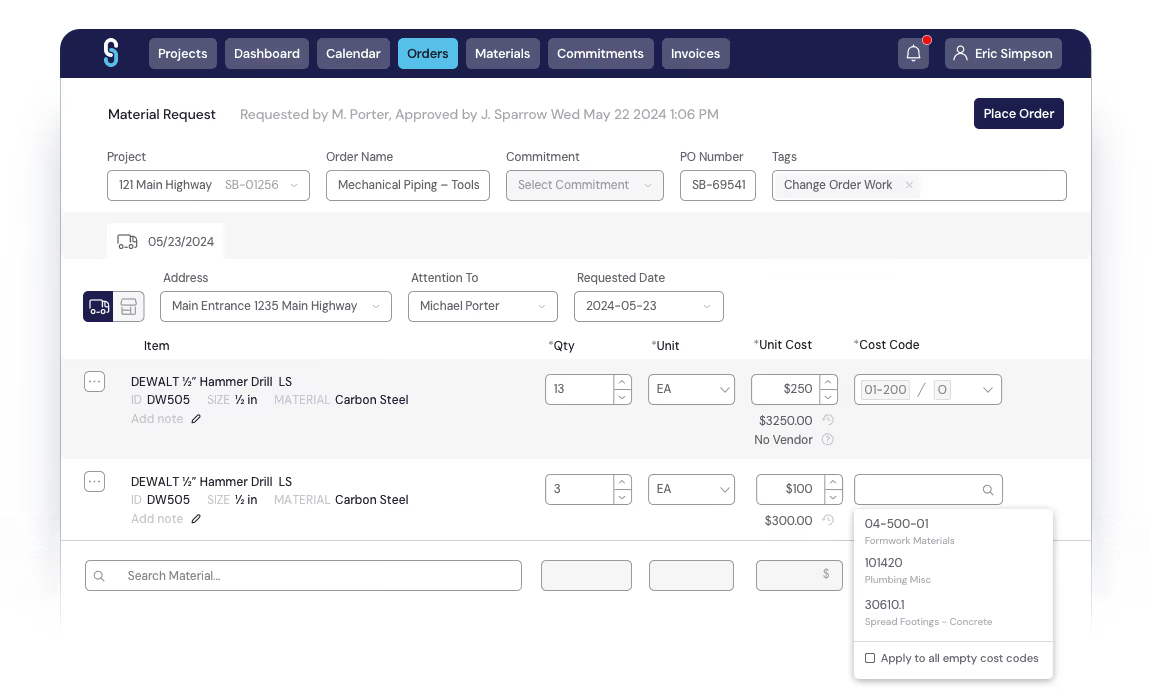
Why auto-population matters
The biggest time saving is on the items you order constantly. Small tools, formwork accessories, consumables, anything that goes on the same cost code every single time. Manually entering that information on every order is one of those tasks that feels minor until you add it up across a year.
SubBase pre-fills cost codes for frequently ordered items. The code is there before anyone has to type it. For a purchasing team processing hundreds of POs a month, that's not a small thing.

The bottom line
If your cost codes are getting assigned at invoice time, you don't have a real-time budget. You have a rearview mirror.
Budget management that works in real time starts with the code on the PO, because that's when the money is committed.
The only way to maintain accurate forecasting across multiple active projects is to capture cost code data at the point of purchase, automatically, every time. That's what SubBase does.
Book a demo to see it in action: https://www.subbase.io/subbase-demo



Stay in touch
Sign up for our monthly newsletter to receive exclusive company updates, learn about industry trends and find out where we will be next. Don't miss out – subscribe today!

