
A guide to budget management

Why forecasting breaks down
Budget forecasting in material procurement is only as good as the data feeding it. And in most manual procurement workflows, that data arrives late, inconsistently, and already a step or two behind reality.
Accounting teams often don't know a purchase has been made until the invoice lands. By then, the commitment is weeks old. Any budget reporting produced in that window is based on incomplete information. PMs are making decisions about upcoming orders without a clear picture of what's already been committed against the line item they're drawing from.
Layer on the fact that tracking spend at the line-item level across multiple active projects, manually, is a task that quickly outpaces anyone trying to do it in a spreadsheet. Something slips. An invoice doesn't get coded correctly. A drawdown doesn't get recorded. The budget drifts, and nobody knows by how much until month-end forces the reckoning.
A connected purchasing and invoice workflow closes that gap, since each invoice lands against a PO that was coded and recorded when the order went out.
What good budget management actually requires
Getting on top of construction budget management comes down to a few non-negotiable practices.
Set up cost codes and budgets before work starts. Not mid-project. Not when the first invoices arrive. The cost code structure established in pre-construction needs to carry through to field execution without being rebuilt from scratch. Companies that treat the pre-construction-to-field handoff as an administrative afterthought pay for it in tracking errors throughout the job.
Keep the cost code structure simple. The more granular you make it, the harder it is to maintain consistently. Complexity in cost coding tends to create the very inconsistencies it was meant to prevent. A clean, consistent structure that everyone follows is worth more than a detailed one that only accounting understands.
Cost code management gets easier when the codes are attached to the material catalog, because frequently ordered items arrive on the PO already coded.
Capture committed spend at the point of purchase. The moment a PO goes out, that commitment needs to be reflected against the budget. Not when the invoice comes in. Not when accounting gets around to it. The drawdown should happen automatically, in real time, so the remaining balance on every line item is always current.
How subbase handles it
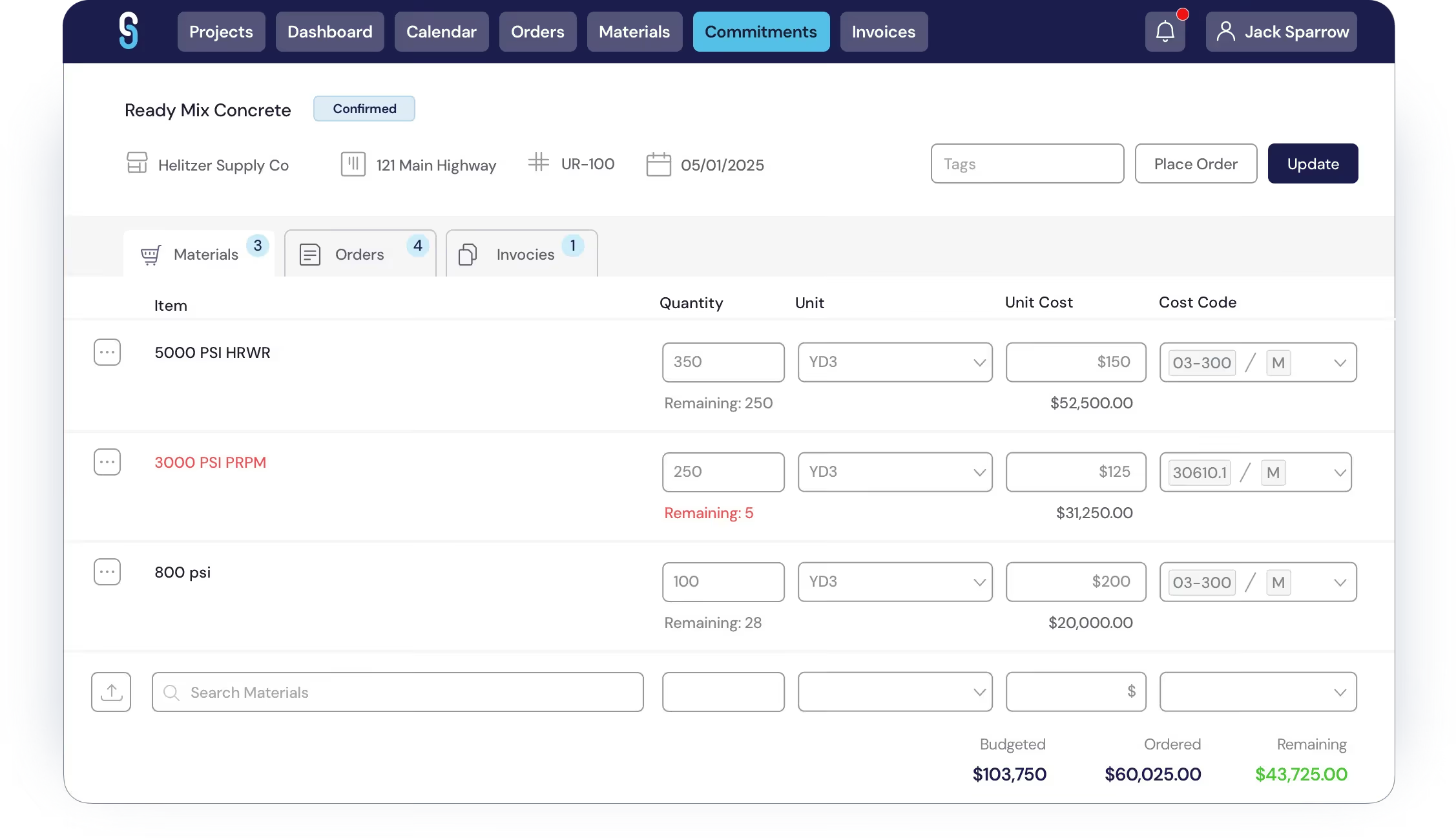
When a PO is raised in SubBase, cost codes are assigned at that moment and the commitment is drawn down against the budget immediately. Accounting doesn't have to wait for an invoice to know what's been spent. The PM can see the remaining balance on any line item, in real time, across all active projects.
The commitments view shows budgeted amounts, committed orders, and remaining balances by line item and cost code. As invoices come in and get matched against POs, the picture updates automatically. No manual reconciliation between what purchasing thinks was ordered and what accounting thinks has been invoiced. It's one system with one version of the truth.
Invoicing reports show current and pending amounts with statuses, making it straightforward to track multiple invoices against a single PO and forecast what's still outstanding. For larger commitments, drawdowns update in real time as orders are processed, so there are no end-of-month surprises about how much of a budget line has actually been consumed.
That level of visibility, down to the line item, across all projects, without requiring someone to build and maintain a custom spreadsheet, is what separates companies that manage their budgets from companies that report on them after the fact.
Owners increasingly expect the first kind, and construction procurement reporting that shows committed spend by line item is how a trade contractor proves it.
Book a demo to see how SubBase handles budget management: https://www.subbase.io/subbase-demo



Stay in touch
Sign up for our monthly newsletter to receive exclusive company updates, learn about industry trends and find out where we will be next. Don't miss out – subscribe today!

